Why Extreme Fast Charging Pushes the Limits of the Battery System
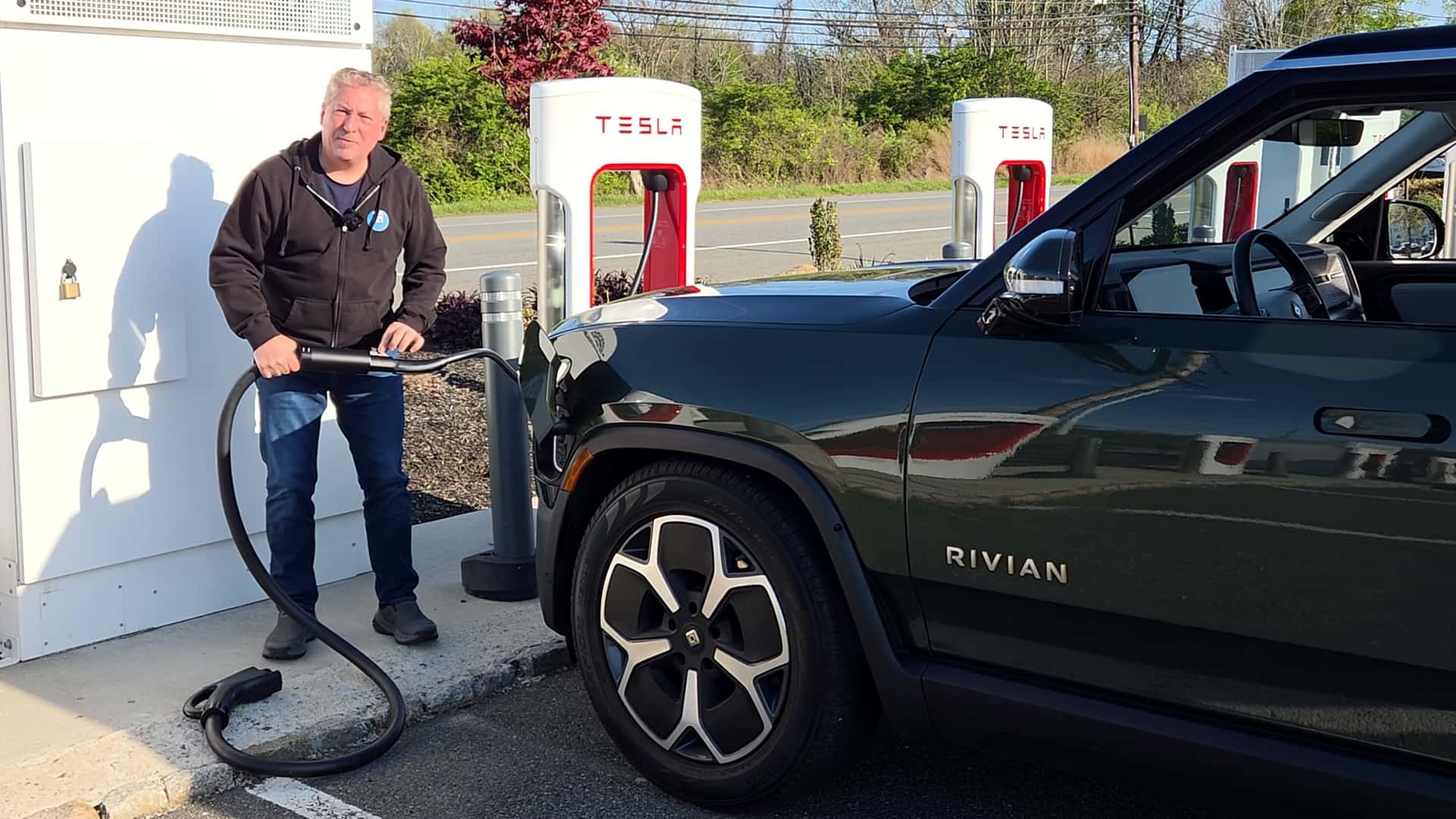
A Tesla Supercharger extension cable that is rated at 350 A and 1,000 V is not just a mechanical accessory; it is part of a high-power electro-thermal system. At these current levels, the charging path, connector interfaces, cable resistance, pack impedance, and cell-level transport processes all matter. The news item highlights a practical failure mode in the field: sessions terminating early under load even when the cable surface temperature stayed below 100°F. That points to a broader truth in EV design: visible cable temperature is only one variable. The limiting factors are often inside the pack, where ionic transport, interfacial polarization, and localized heating dictate whether the system can sustain high charge rates.
For LFP battery packs in particular, fast charging is a balance between safety and throughput. LFP chemistry offers strong thermal stability and long cycle life, but it is not immune to charge-rate limits. The cell’s rate capability is strongly governed by ionic conductivity, electrode porosity, separator transport, and the ability of the thermal management system to keep the whole pack in a narrow temperature window.
Ionic Conductivity: The Hidden Bottleneck in Fast Charging
During high-rate charging, lithium ions must move rapidly from the cathode through the electrolyte and separator to the graphite anode. The challenge is not only bulk electrolyte conductivity, but also tortuosity and interfacial kinetics inside the porous electrodes.
Main transport constraints
-
Electrolyte ionic conductivity drops at lower temperatures
- Cold packs show higher overpotential because ion mobility slows.
- Even LFP’s favorable thermal stability cannot overcome poor low-temperature transport.
-
Concentration polarization increases at high current
- Ion depletion near the anode/electrolyte interface creates steep gradients.
- This raises local state-of-charge heterogeneity within the electrode.
-
Solid-state diffusion in active materials becomes rate-limiting
- In graphite anodes, lithium insertion is not instantaneous.
- If the surface accepts lithium faster than it can diffuse inward, lithium accumulates at the surface.
- Ohmic losses compound at the pack level
- Busbars, welds, contacts, and cable interfaces each contribute resistance.
- A few milliohms at 500 A becomes meaningful heat generation.
For high-power charging, the issue is often not average pack temperature, but local hotspots and localized transport starvation. A pack may appear “cool enough” overall while certain cells or terminal regions are already operating beyond safe charge-acceptance limits.
Thermal Management: Keeping Cells in the Fast-Charge Sweet Spot
Thermal management systems are designed not just to remove heat, but to shape temperature distribution across the pack. That distinction matters because charge acceptance is highly temperature dependent. In many EVs, the optimal charging range is roughly in the mid-20s to mid-30s °C, where internal resistance is low enough for fast charging but reaction kinetics are still stable.
What generates heat at extreme rates
-
I²R heating
- The dominant source in cables, tabs, busbars, and contact points.
- Doubles rapidly with current increase.
-
Entropic heat
- Can be endothermic or exothermic depending on state of charge and chemistry.
- Important in LFP cells over wide SOC ranges, though typically secondary to resistive heating at very high current.
- Polarization heat
- Caused by interfacial and transport limitations.
- Often strongest when charging from low SOC at maximum power.
How liquid cooling plates help
Liquid cooling plates are the backbone of most high-performance EV thermal architectures because they deliver high heat flux removal with relatively uniform cell-to-coolant temperature gradients.
Key advantages:
- High convective heat transfer
- Coolant channels beneath or beside cells can remove heat faster than air systems.
- Better pack uniformity
- Reduces cell-to-cell temperature spread, which is critical for consistent charge acceptance.
- Fast transient response
- Useful when DC fast charging begins with high current spikes at low SOC.
But liquid cooling plates have design limitations too:
- Thermal contact resistance
- If the cell-to-plate interface is poor, heat cannot escape efficiently.
- Uneven coolant distribution
- Manifold maldistribution can create hot and cold zones.
- Pressure drop and parasitic load
- Higher flow rates improve cooling but increase pump power.
- Localized thermal lag
- Even with a cold plate, internal jelly-roll or stacked-electrode regions may heat faster than the plate can respond.
For an LFP battery, managing temperature uniformly is especially important because the chemistry can tolerate heat well, but charge-rate tolerance still varies strongly with temperature and cell aging state.
Lithium Plating Risk: The Critical Fast-Charge Failure Mode
Lithium plating occurs when metallic lithium deposits on the anode surface instead of intercalating into graphite. This is one of the most serious hazards in fast charging, particularly at low temperatures, high current, and elevated anode overpotential.
Conditions that increase plating risk
- Low temperature
- Slower diffusion and higher interfacial impedance.
- High charge current
- The anode cannot absorb incoming lithium quickly enough.
- High SOC near the end of charge
- Graphite potential rises toward the lithium plating threshold.
- Cell aging
- Loss of active material and increased impedance reduce safety margins.
Why this matters structurally
Lithium plating is not just a capacity issue. It can:
- Reduce cyclable lithium inventory.
- Form dendritic structures that penetrate the separator.
- Trigger internal short circuits.
- Accelerate gas generation and swelling.
- Cause irreversible impedance growth.
In a pack repeatedly exposed to aggressive fast charging, the cumulative effect is often subtle at first: reduced usable capacity, increased heat generation, and slower subsequent charging sessions. Over time, plated lithium can create mechanical instability at the particle and electrode level, especially if repeated stripping and redeposition occur.
Structural Integrity Under Repeated High-Power Cycling
Rapid charging induces mechanical stress in the electrodes and current collectors. Even in LFP cells, where cathode expansion is relatively moderate compared with some high-nickel chemistries, pack-level integrity still depends on component robustness.
Key structural concerns
- Electrode swelling and stack pressure changes
- Repeated expansion/contraction can relax compression and degrade contact.
- Separator deformation
- Thermal and mechanical stress may thin or distort separator pathways.
- Tab and weld fatigue
- High currents magnify local heating at joints and laser welds.
- Binder and conductive network degradation
- Heat accelerates loss of adhesion and particle isolation.
A charging accessory may fail first because of contact resistance or communication issues, but the same electrical stress profile is also what pushes the battery closer to structural degradation. That is why manufacturers often restrict charge current aggressively when temperature, cell impedance, or pack state is outside a narrow window.
Engineering Implications for LFP Fast Charging
LFP battery systems are often marketed as durable and safer under abuse, but fast charging still requires disciplined thermal and electrochemical control.
Best-practice mitigation strategies
- Precondition the pack before DC fast charging.
- Maintain tight coolant flow control through liquid cooling plates.
- Limit fast-charge current at low pack temperature.
- Use cell balancing and SOC-window management to avoid high-voltage stress.
- Monitor localized temperature, not only pack-average temperature.
- Design busbars, connectors, and terminals for low-resistance, high-cycle reliability.
Bottom Line
Fast charging at 350 A-class power levels is an integrated systems problem. The cable may look fine externally, yet the real constraints are ionic conductivity inside the cells, resistive heating in the charging path, and the thermal management system’s ability to keep every cell within a safe kinetic window. For LFP battery packs, liquid cooling plates are essential to manage heat generation and maintain uniformity, but they cannot eliminate the electrochemical realities of lithium plating and structural fatigue. The closer charging approaches the edge of the envelope, the more pack design, thermal architecture, and control logic determine whether high power is merely possible—or sustainable.
Source reference: Industry News