400 kW Fast Charging and the Battery-Physics Reality
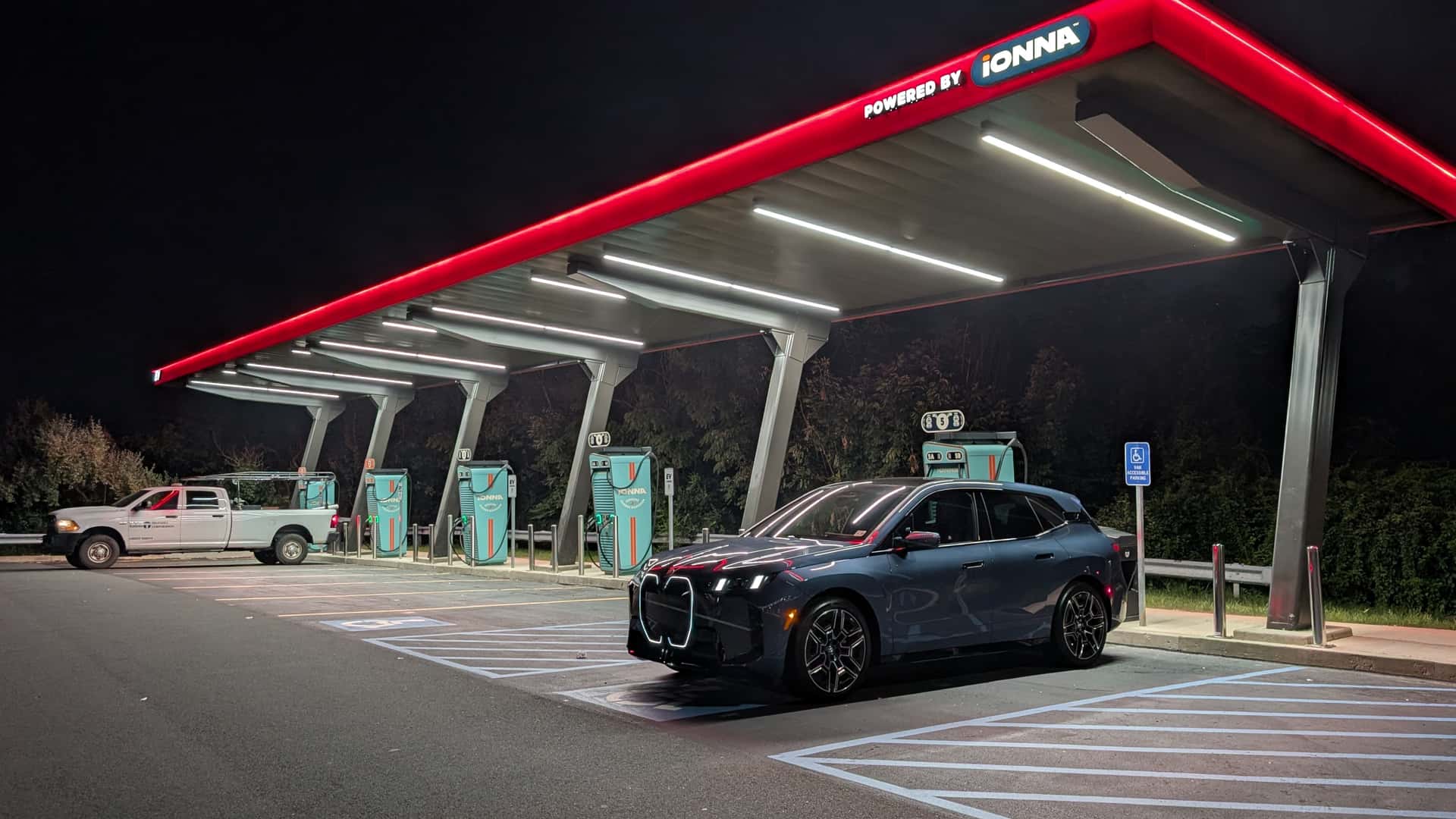
Ionna’s rollout of 400-kilowatt DC fast chargers highlights the direction of public charging: shorter stops, higher peak power, and broader access to premium EV charging. For battery engineers, however, a 400 kW charger is not just a marketing number. It is a stress test of electrochemistry, heat rejection, and mechanical durability.
At these rates, the battery is forced to accept very high current densities, especially in vehicles with large packs or high C-rate charging windows. The limiting factors are no longer only charger availability or connector standards; they are:
- ionic transport inside the electrodes and electrolyte
- ohmic losses across cells, busbars, and interconnects
- thermal gradients across the pack
- lithium plating risk at the graphite anode
- long-term structural fatigue in electrodes and cell hardware
For battery chemistries such as LFP battery systems, the charging ceiling is often conservative because the chemistry prioritizes cycle life, thermal stability, and cost over extreme charge acceptance.
Ionic Conductivity Limits Under Extreme Fast Charging
Why ionic transport becomes the bottleneck
During fast charging, lithium ions must move rapidly from the cathode through the electrolyte and separator to the anode. If ion transport cannot keep up with the applied current, local concentration polarization rises and the cell voltage increases quickly. That creates two problems:
- charging power is throttled prematurely by the battery management system
- localized electrochemical stress increases, especially near the anode surface
In practice, the effective charge rate is limited by a combination of:
- electrolyte ionic conductivity
- separator pore structure and tortuosity
- electrode thickness and porosity
- temperature-dependent diffusion kinetics
- current collector and tab design
LFP battery implications
LFP batteries are thermally robust, but they are not immune to transport limitations. Their olivine phosphate cathode has a stable crystal framework and good safety characteristics, yet fast charging still depends on how efficiently lithium ions can move within the full cell architecture.
Key constraints for LFP fast charging include:
- lower cathode operating voltage than nickel-rich systems, which affects energy throughput per charge window
- relatively flat voltage curve, making SoC estimation more difficult at high current
- sensitivity of graphite anodes to low-temperature charging, regardless of the cathode chemistry
- need for precise control of upper charge voltage to avoid overpotential spikes
In other words, the “safe” chemistry does not remove the transport bottleneck; it only gives engineers a more forgiving thermal and abuse envelope.
Heat Generation at 400 kW: Where It Comes From
Fast charging generates heat through several concurrent mechanisms. The total thermal load is not simply I²R loss; it includes electrochemical and entropic contributions as well.
Major heat sources
- Ohmic heating: resistance in electrolyte, electrodes, tabs, welds, connectors, and cable interfaces
- Charge-transfer overpotential: reaction kinetics at the electrode/electrolyte interface
- Concentration polarization: local gradients that force extra voltage and dissipate energy as heat
- Entropic heat: reversible heat generation associated with lithium intercalation processes
At high state-of-charge current, heat often concentrates in the anode region and at tab locations. This can create pack-level temperature nonuniformity even when the average cell temperature appears acceptable.
Why thermal gradients matter
A pack can be “cool enough” in average temperature yet still suffer from localized hotspots. These hotspots accelerate aging because cell degradation is temperature-dependent and highly non-linear.
Thermal gradients can cause:
- uneven internal resistance growth
- mismatched cell aging across parallel strings
- local gas generation
- separator shrinkage risk in extreme cases
- increased imbalance during future charge cycles
How Thermal Management Systems Handle Extreme Charging
Liquid cooling plates are the main defense
For high-power DC charging, liquid cooling plates are typically the most effective thermal management tool. They provide high heat transfer coefficients and can remove joules rapidly enough to keep cell temperatures in a safe operating band.
A well-designed liquid cooling plate must manage:
- high transient heat flux
- uniform cold-plate contact across the module
- low pressure drop with adequate coolant flow
- reliable thermal interface material performance over life
- corrosion and coolant compatibility
For packs intended to tolerate high charge acceptance, the cooling system often needs to be integrated directly beneath or alongside cell modules to reduce thermal resistance. The goal is not only to cool the pack, but to prevent temperature gradients from forming in the first place.
Pack-level thermal control strategies
Advanced systems generally combine:
- preconditioning before arriving at the charger
- active coolant circulation during charging
- low-resistance thermal paths from cells to plate
- algorithmic derating if a single module begins to drift thermally
- cell-to-cell balancing strategies to avoid over-stressing the warmest cells
This becomes especially important in large-format EVs where charging sessions can inject hundreds of kilowatts into the battery in a matter of minutes.
Lithium Plating: The Most Serious Fast-Charging Failure Mode
How plating occurs
Lithium plating happens when lithium ions arrive at the graphite anode faster than they can intercalate into its structure. Instead of being absorbed into the graphite layers, metallic lithium deposits on the anode surface.
This is promoted by:
- high charging current
- low temperature
- high state of charge
- aged or high-impedance cells
- poor thermal uniformity
- excessive anode overpotential
Why plating is dangerous
Lithium plating can lead to:
- irreversible capacity loss
- dendrite growth and internal short risk
- increased impedance
- accelerated gas generation
- uneven lithium inventory across the cell
Even when plating is not immediately catastrophic, it often creates latent damage. The cell may appear to charge normally for some time while quietly losing usable capacity and safety margin.
LFP does not eliminate plating risk
A common misconception is that LFP battery systems are inherently immune to fast-charge damage. LFP improves thermal stability at the cathode, but plating is governed largely by anode behavior, temperature, and current density. Since most EV anodes remain graphite-based, the plating problem remains very real.
To reduce plating risk, engineers use:
- strict low-temperature charge limits
- pack preheating before DC fast charging
- voltage and current tapering at mid-to-high SoC
- electrode designs that lower local current density
- robust thermal management to keep anode kinetics favorable
Structural Integrity Under Repeated High-Power Cycling
Mechanical stress mechanisms
At 400 kW charging, cells are not only electrochemically stressed; they are mechanically stressed. Rapid lithium insertion into electrodes causes volume changes, which can lead to particle cracking, binder fatigue, and interfacial delamination.
Structural concerns include:
- crack formation in active material particles
- loss of contact between particles and conductive carbon network
- separator deformation under combined heat and pressure
- swelling of pouch, prismatic, or cylindrical cells
- weld and tab fatigue from thermal cycling
Why pack architecture matters
A strong cell chemistry cannot compensate for weak mechanical design. Pack-level structural integrity depends on:
- uniform compression strategy for modules
- robust enclosure stiffness
- vibration resistance during vehicle operation
- repeated thermal expansion/contraction management
- stable coolant plate geometry that preserves contact pressure
If one region of the pack runs hotter, its materials expand differently, leading to mechanical mismatch and accelerated wear. Over thousands of fast-charge events, that mismatch can become a reliability issue.
Engineering Trade-Offs: Speed, Life, and Safety
Ultra-fast charging is fundamentally a systems optimization problem. To enable high power without destructive degradation, OEMs and charging networks must coordinate vehicle-side and infrastructure-side constraints.
Practical mitigation strategies
- use preconditioning to bring cell temperature into the optimal range
- limit peak charging power at low SoC or low ambient temperature
- taper current aggressively at high SoC to avoid plating
- improve electrolyte formulation and separator design
- minimize pack thermal resistance with liquid cooling plates
- lower contact and busbar resistance to reduce parasitic heat
For LFP battery packs, the stable chemistry can support long cycle life, but only if charge protocols respect ionic transport limits and thermal boundaries. For higher-energy chemistries, the margin is even narrower.
Conclusion
400 kW DC fast charging shows where EV infrastructure is heading, but battery acceptance remains governed by physics. The central challenges are ionic conductivity, heat removal, and lithium plating avoidance. Liquid cooling plates are essential for maintaining temperature uniformity and preventing localized overstress, but they cannot fully solve the limitations of electrode transport and anode intercalation.
As charging power rises, the winning design will not simply be the pack with the highest nominal charge rate. It will be the battery system that combines:
- optimized ionic pathways
- disciplined thermal management
- plating-resistant charge algorithms
- durable mechanical architecture
- accurate battery management control
That balance is what determines whether extreme fast charging becomes a routine convenience or a long-term durability liability.
Source reference: Industry News