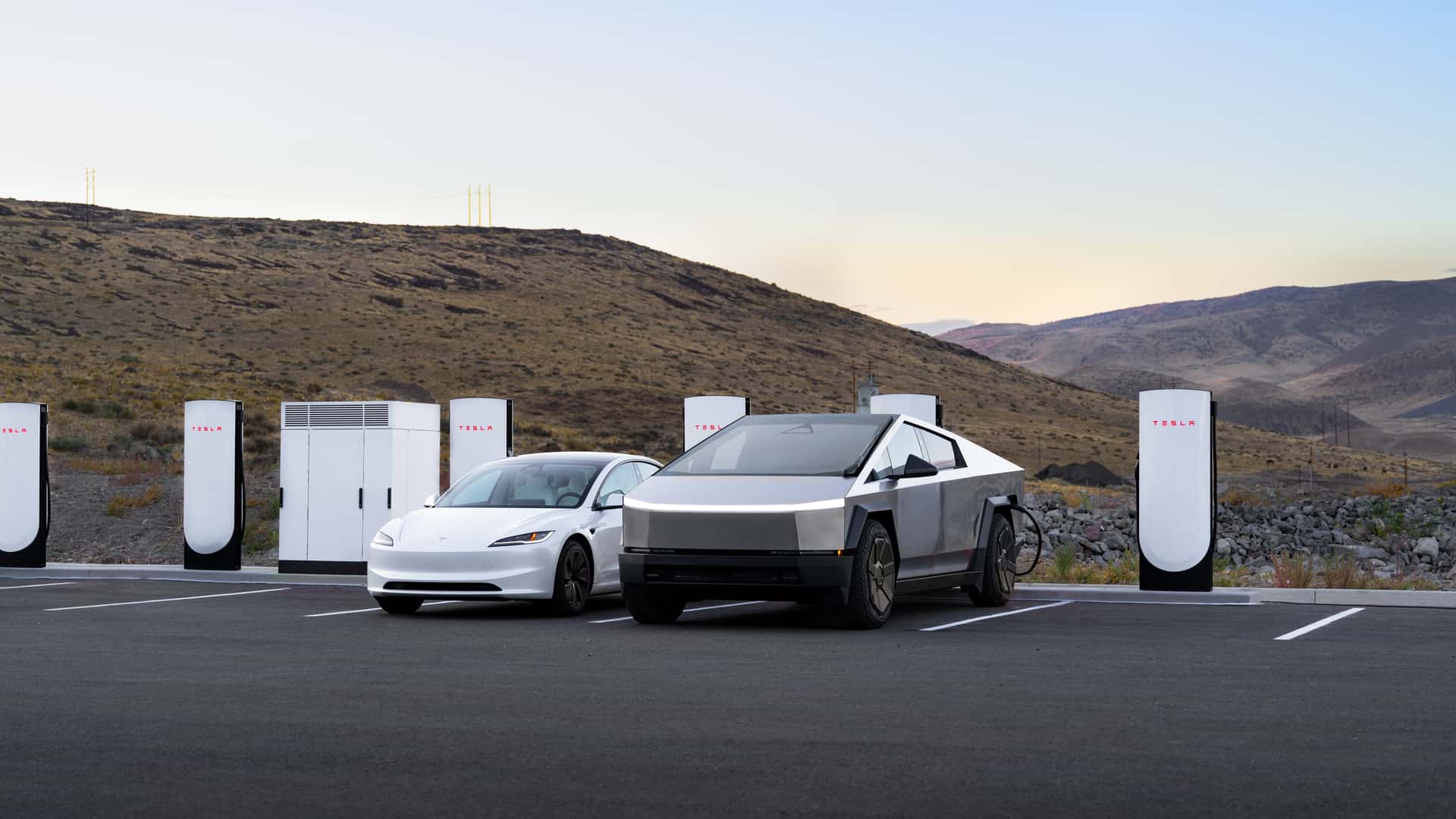
Megawatt Charging Changes the Battery Design Problem
The latest 500 kW to 1.2 MW charging hardware signals a major shift in EV energy delivery, but it also exposes the limits of today’s battery architectures. A charging station can advertise extreme power, yet the real bottleneck is no longer the cable or dispenser alone. The critical constraints move into the cell: ionic conductivity, lithium-ion transport, heat rejection, and electrode mechanical stability.
For any LFP battery or high-nickel pack, fast charging at these rates is not simply a matter of adding current. It requires the entire electrochemical and thermal system to survive steep gradients in concentration, temperature, and stress without accelerating aging or creating safety risks.
Ionic Conductivity Limits Under Extreme Fast Charging
At high charge rates, the rate-limiting step often becomes ion transport rather than electron transport. During charging, lithium ions must migrate through:
- the liquid electrolyte
- the porous separator
- the tortuous electrode pores
- the solid active material particles
As current increases, the ion flux demanded at the anode surface rises sharply. If the electrolyte and porous structure cannot replenish lithium ions quickly enough, local overpotential increases and the cell can enter a diffusion-limited regime.
What this means in practice
- Electrolyte concentration polarization develops near the anode.
- Ohmic losses rise due to higher current density and finite electrolyte conductivity.
- Pore-scale depletion can occur in thick electrodes, especially in energy-dense designs.
- For LFP battery systems, the nominally robust phosphate cathode chemistry does not eliminate these transport limits; it simply improves thermal and safety tolerance compared with some alternatives.
A common misconception is that LFP batteries are naturally “fast-charge friendly” because of their stability. In reality, LFP’s lower operating voltage and typically thicker, higher-loading electrodes can make fast charging difficult unless the cell design is carefully optimized for ion transport. The challenge becomes even greater in large-format cells intended for high-power EV platforms.
Heat Generation Scales Nonlinearly With Charging Power
Extreme charging rates generate heat through multiple mechanisms:
- Joule heating from internal resistance
- Entropic heat from electrochemical reactions
- Polarization heat from concentration gradients
- Localized heating from current hotspots and tab/junction resistance
At 400 kW, 500 kW, or higher, the pack may absorb hundreds of amps. Even small increases in internal resistance create substantial thermal loads. Since resistance is temperature-dependent and spatially nonuniform, heat does not distribute evenly. This creates hot regions near tabs, busbars, cell edges, and current collector interfaces.
Why thermal gradients matter
Thermal nonuniformity creates performance imbalance across the pack:
- hotter cells charge faster initially
- cooler cells lag behind, limiting the pack’s overall charging window
- repeated gradients accelerate cell-to-cell divergence
- local hotspots can become the origin point for degradation or swelling
The practical consequence is that fast charging is as much a thermal management problem as it is an electrochemical one.
Liquid Cooling Plates Are Essential, But Not Sufficient Alone
Modern high-power EV packs increasingly rely on liquid cooling plates mounted beneath, above, or between modules to remove heat efficiently. Their role is to maintain tight cell temperature windows during both charging and driving.
How liquid cooling plates help
- Increase heat transfer coefficient compared with air cooling
- Spread heat laterally to reduce hotspot formation
- Keep adjacent cells at similar temperatures
- Enable higher continuous power by lowering thermal resistance
- Support preconditioning before arrival at a fast charger
For high-power charging, the best systems are not merely reactive. They are predictive and integrated with battery management software. The vehicle may pre-cool or pre-heat the pack before arriving at the station, then actively modulate coolant flow based on measured current, impedance, and predicted heat generation.
However, liquid cooling plates face several design constraints:
- thermal contact resistance between cell and cooling interface
- coolant channel pressure drop versus pump power
- plate thickness versus packaging volume
- long-term leakage and corrosion risk
- uneven cooling if cell geometry is poorly matched to channel layout
For LFP battery packs, which often prioritize long cycle life and safety, thermal uniformity is especially important. LFP chemistry tolerates heat better than some alternatives, but repeated exposure to uneven temperatures still drives accelerated aging, binder degradation, and impedance rise.
Lithium Plating Becomes a Major Risk at High Charge Rates
The most serious electrochemical failure mode during aggressive charging is lithium plating on the graphite anode. Instead of intercalating into the graphite structure, lithium ions deposit as metallic lithium when the anode potential falls too low relative to lithium metal.
Conditions that promote lithium plating
- charging at low temperatures
- very high current density
- thick electrodes with slow diffusion
- aged cells with elevated impedance
- insufficient preconditioning or uneven pack heating
At megawatt-class charging levels, the margin for error is small. If the anode cannot accept lithium fast enough, metallic deposition begins. This is dangerous because plated lithium can:
- reduce capacity irreversibly
- increase cell impedance
- form dendrites that threaten separator penetration
- trigger internal short circuits under extreme conditions
Why thermal management and plating are linked
Temperature is a double-edged variable. Higher temperature improves ionic conductivity and anode diffusion kinetics, which can reduce plating risk. But excessive temperature accelerates side reactions and material degradation. The goal is not maximum temperature; it is the right temperature with minimal gradients.
This is where advanced thermal management systems become central to fast charging control. By managing the pack within a narrow thermal band, the system keeps the anode from locally going into plating conditions while avoiding thermal runaway of aging mechanisms.
Structural Integrity and Mechanical Stress Under Fast Charging
Rapid charging does not only stress chemistry. It also stresses structure. As lithium ions enter and leave the electrodes quickly, active materials expand and contract. This creates strain in:
- electrode particles
- binder networks
- conductive additive pathways
- current collectors
- tab welds and interconnects
In LFP cells, the olivine structure is relatively stable, but large-format high-power cells still face:
- particle cracking from repeated stress
- electrode delamination
- separator mechanical fatigue
- swelling from gas generation in aged cells
- uneven compression across the stack
If a pack is repeatedly charged at extreme power, local heating and cycling-induced swelling can compromise the mechanical fit between cell and cooling plate. That can increase contact resistance, which in turn raises temperature further—a classic thermal-mechanical feedback loop.
Design Implications for Next-Generation Packs
Supporting megawatt charging requires a systems approach, not just a charger upgrade.
Key engineering priorities
- Lower internal resistance through optimized electrode formulation and thinner current paths
- Improved ionic conductivity via electrolyte chemistry, separator design, and pore architecture
- Active thermal management using high-performance liquid cooling plates and preconditioning logic
- Adaptive charge control to avoid plating by dynamically limiting current based on temperature and impedance
- Mechanical reinforcement to preserve compression and interface integrity over life
For LFP battery platforms, the path forward likely involves hybrid design choices: moderate electrode thickness, improved electrolyte conductivity, low-resistance tabs, and tightly integrated cooling structures. LFP’s inherent safety and life-cycle advantages remain valuable, but its fast-charging capability must be engineered, not assumed.
Conclusion
Megawatt charging makes clear that EV charging speed is bounded by the cell’s ability to move ions, reject heat, and preserve structure under stress. If ionic conductivity is insufficient, current density creates concentration polarization. If thermal management is weak, hotspots emerge and accelerate degradation. If charging is too aggressive at low temperature or high impedance, lithium plating becomes likely. And if mechanical design is not robust, swelling and stress damage the pack over time.
The future of ultra-fast charging will depend on batteries and cooling systems engineered as one integrated platform. In that environment, liquid cooling plates are not just a thermal accessory—they are a core enabler of safe, repeatable, high-power energy transfer.
Source reference: Industry News