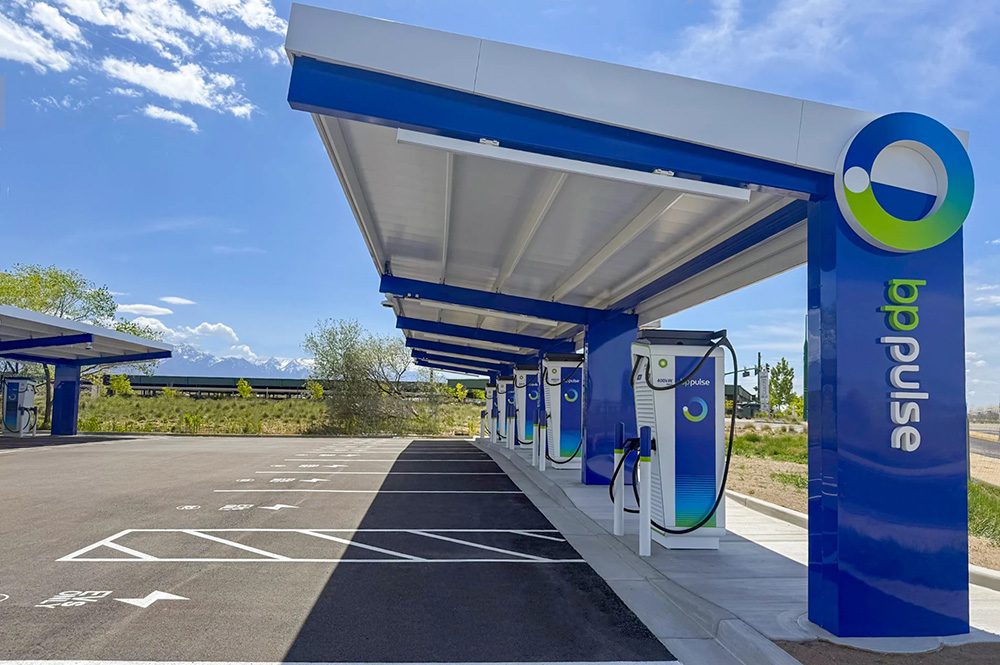
Engineering Interpretation of the Article
The source text is primarily about charging-network software interoperability, not cell-level battery design. However, the operational context it implies is highly relevant to battery engineering: bp pulse’s ultra-fast public charging and fleet-centric use case will predominantly serve vehicles that must tolerate repeated high-C-rate charging events, elevated thermal throughput, and variable state-of-charge windows. From a teardown and electrochemical systems perspective, this means the battery pack architecture, cell chemistry selection, and thermal management strategy become the dominant determinants of real-world charging performance and durability.
Assumed Cell Chemistry and Likely Design Targets
Given the application context—commercial fleets, rideshare, rental, and last-mile delivery—there is a strong probability that many of the vehicles using these charging hubs employ LFP (lithium iron phosphate) chemistry, with some higher-range or premium platforms using high-nickel NMC variants.
Why LFP is the most likely fleet chemistry
LFP is favored in high-utilization fleet applications because it offers:
- Higher cycle life under frequent charge/discharge operation
- Better thermal stability and lower exothermic behavior during abuse
- Lower cost per kWh
- Reduced dependence on nickel and cobalt supply chains
However, LFP has intrinsic limitations that directly affect fast-charging behavior:
- Lower cell voltage than NMC, which increases current demand for a given power level
- Lower specific energy, forcing larger and heavier packs for equivalent range
- Relatively flat OCV-SOC curve, which complicates precise SOC estimation and can reduce the effectiveness of conventional charging taper strategies
- Lower bulk lithium diffusion rate at low temperature, which increases plating risk during aggressive DC fast charging
Why some vehicles still use NMC
Fleet-adjacent platforms that emphasize range, payload efficiency, or premium duty cycles may use NMC cells because they provide:
- Higher gravimetric and volumetric energy density
- Better packaging efficiency
- More favorable range-to-mass ratio
But NMC introduces its own constraints:
- Reduced thermal runaway margin compared with LFP
- Greater sensitivity to high voltage operation and elevated temperature
- Faster degradation if repeatedly charged to high SOC at high temperature
- More demanding thermal control requirements during ultra-fast charging
Solid-state relevance
Solid-state batteries are not the likely dominant chemistry in the installed fleet base implied by this article. If present at all, they would be in pilot or early deployment stages. Their theoretical advantage is improved safety and potentially higher charging tolerance, but current engineering limitations remain substantial:
- Interfacial impedance at solid-solid boundaries
- Mechanical contact maintenance under cycling
- Dendrite suppression is not fully solved in all configurations
- Low-temperature power performance remains a challenge
For the current charging ecosystem described, the practical assumption remains primarily LFP with some NMC, not solid-state.
Intrinsic Chemical Limitations Relevant to Ultra-Fast Charging
LFP: High-Safety, Lower-Power Tradeoff
LFP’s stable olivine structure gives it excellent thermal robustness, but by electrochemical standards it tends to suffer from:
- Lower lithium-ion diffusivity than optimized NMC systems under some conditions
- Higher polarization at high current
- Pronounced voltage plateau, which makes charge acceptance estimation less linear
- Strong sensitivity to temperature during high-rate charge acceptance, especially below ~15°C
At high C-rates, LFP packs may hit voltage limits before reaching full electrochemical saturation, causing charge taper to begin earlier than operators expect. This is often interpreted as “slow charging,” but the underlying issue is not software—it is cell polarization and diffusion limitation.
NMC: Higher Energy Density, Narrower Thermal Margin
NMC can accept higher power in many designs, but only if thermal conditions are tightly controlled. Intrinsic limitations include:
- Higher tendency toward parasitic side reactions at elevated SOC and temperature
- Cathode structural degradation under repetitive high-voltage cycling
- Greater risk of oxygen release and cathode-driven thermal propagation under abuse
- Tighter constraints on allowable temperature heterogeneity across the pack
In practice, a high-power NMC pack can outperform LFP in charging speed, but the price is more aggressive thermal engineering and stricter BMS protection logic.
Thermal Management Challenges in Ultra-Fast Charging
The article’s charging-network context implies frequent use of DC fast chargers and likely high-power depot or corridor charging. Under these conditions, battery thermal management is not just a cooling problem; it is a diffusion and uniformity problem.
Liquid Cooling Plate Design Constraints
Most modern EV packs in this segment use liquid-cooled cold plates or similar glycol-based thermal interfaces. The engineering challenge is to maintain low thermal resistance while preserving manufacturability and crashworthiness.
Key design variables
- Channel geometry and flow distribution
- Coolant Reynolds number and local convective coefficient
- Plate-to-cell contact pressure
- TIM thickness and conductivity
- Manifold balancing to avoid partial starvation
- Pressure drop versus pump power tradeoff
Failure modes of thermal design
A cooling plate may have adequate average heat removal but still perform poorly if:
- The coolant inlet/outlet path creates longitudinal gradients
- Manifold design causes nonuniform flow across parallel channels
- Cell-to-plate contact is insufficient due to stacking tolerance
- Thermal interface compliance degrades after repeated expansion/contraction cycles
The result is cell-to-cell thermal dispersion, which is especially damaging in multi-cell modules. Even a 3–5°C gradient can create measurable SOC imbalance over time, because warmer cells exhibit lower internal resistance and different charge acceptance dynamics than cooler neighbors.
Surface Cooling vs. Tab Cooling
For high-power charge acceptance, the dominant heat source is not only Joule heating in the jelly roll or electrode stack, but also resistive loss at current collectors, welds, tab connections, and busbar interfaces.
Surface cooling
Surface cooling is common because it is mechanically straightforward and compatible with pouch, prismatic, and cylindrical modules. Its limitation is thermal path length:
- Heat generated near the tab or inner layers must conduct through multiple materials before reaching the cooled surface
- High-power pulses can create internal hotspots before the surface temperature rises measurably
- The outer casing may appear within limits while the core temperature temporarily exceeds safe thresholds
Tab cooling
Tab cooling or tab-adjacent thermal extraction can significantly reduce local hotspot severity, especially at high charge rates. This is particularly useful because:
- Tabs and welds can become current bottlenecks
- Local I²R heating can be concentrated in a small volume
- High current ingress during fast charging often starts at a few high-conductance pathways
However, tab cooling is difficult to implement at scale due to:
- Electrical isolation requirements
- Packaging complexity
- Potential mechanical fatigue at tab interfaces
- Added manufacturing cost and reliability risk
Key technical point
For ultra-fast charging, cooling the cell exterior is often insufficient unless the internal thermal gradients are also controlled. A pack can meet average temperature targets while still suffering accelerated degradation due to localized thermal aging near tabs or current collectors.
Thermal Gradients and Their Degradation Impact
Thermal nonuniformity is one of the most important hidden variables in fleet charging infrastructure.
Why gradients matter
Lithium-ion cell aging accelerates with temperature, but not uniformly:
- Hotter cells experience faster SEI growth and electrolyte decomposition
- Cooler cells may charge more slowly and are more prone to lithium plating at the anode
- Mixed-temperature packs develop imbalance in internal resistance and usable capacity
This creates a feedback loop:
- One cell or region heats faster
- That cell charges differently than neighbors
- Imbalance increases
- BMS limits pack power based on the weakest or coldest cell
- Effective charging throughput declines over life
Practical consequence in fleet duty cycles
For rideshare and delivery fleets, vehicles may arrive at chargers with varying initial SOC and battery temperature. Public ultra-fast charging infrastructure must therefore tolerate a wide operating envelope, which is difficult unless the vehicle preconditions the pack aggressively before arrival. Without preconditioning, charge rate is usually limited by the coldest cell in the pack, not by the charger’s nominal output.
Fast-Charging Constraints at the Electrochemical Level
Ionic Conductivity and Internal Transport Limits
Fast charging is fundamentally constrained by the ability of lithium ions to migrate through:
- Electrolyte bulk
- Separator pores
- Electrode tortuosity
- Solid-state diffusion within active material particles
As current density increases, concentration polarization rises. This leads to:
- Larger overpotential
- Voltage rise at the anode and cathode interfaces
- Reduced charge acceptance efficiency
- Earlier taper initiation by the BMS
If the electrolyte conductivity is insufficient, or if tortuosity is too high in the electrode stack, the pack cannot absorb charge quickly without severe polarization.
Lithium Plating Risk at High C-Rates
The most critical limitation during fast charging, especially in cold conditions or near high SOC, is lithium plating on the graphite anode.
Mechanism
When the anode potential drops too close to 0 V vs. Li/Li+, lithium ions can no longer intercalate into graphite quickly enough. Metallic lithium then deposits on the surface instead of entering the host structure.
Why this is dangerous
Lithium plating causes:
- Loss of cyclable lithium
- Higher impedance over time
- Gas generation and SEI instability
- Dendritic growth risk under repeated abuse
- Potential latent safety hazards if plated lithium becomes isolated or reactive
Conditions that promote plating
- Low cell temperature
- High charge current
- High SOC, where anode acceptor sites are less available
- High internal resistance from aging
- Nonuniform thermal distribution within the pack
This is why a charging network may advertise high power, but the actual vehicle charge curve is constrained by chemistry, temperature, and BMS logic rather than charger capability alone.
BMS and Vehicle-to-Charger Coordination Implications
The article emphasizes charger_network software integration, but from a battery engineering standpoint the more important layer is vehicle-side control.
What the BMS must manage
- Cell voltage limits during fast charge
- Temperature-based current derating
- Differential balancing across modules
- Real-time estimation of plating risk
- Pack preconditioning before DC fast charge enablement
- Charge taper strategy based on impedance state and SOC
Why fleet charging is especially demanding
Fleet vehicles often operate with:
- Short dwell times
- High average daily energy throughput
- Repeated partial charging
- Variable routing and ambient conditions
This means the BMS must support high throughput without allowing chronic micro-damage from thermal cycling or plating. A charger network can improve accessibility, but it cannot overcome a cell chemistry’s fundamental fast-charge envelope.
Engineering Bottom Line
The charging-network integration described in the article is operationally significant because it increases exposure to repeated high-power charging events. For the battery system, the bottleneck is not platform connectivity; it is the interaction between chemistry, heat rejection, and charge kinetics.
Most likely technical conclusions
- Assumed dominant chemistry: LFP in fleet-oriented vehicles, with some NMC in higher-energy platforms
- Main LFP limitation: lower power density and stronger low-temperature fast-charge constraints
- Main NMC limitation: tighter thermal safety margin and greater degradation sensitivity at high SOC/high temperature
- Thermal challenge: maintaining low gradients across the pack, not merely low average temperature
- Fast-charge risk: lithium plating driven by low temperature, high current, and local polarization
In practical terms, the success of ultra-fast charging for fleet applications is determined by whether the pack can maintain electrochemical uniformity under repeated high-C-rate operation. Without robust thermal architecture and conservative BMS controls, expanded charger availability simply increases the frequency with which latent battery limitations are exposed.