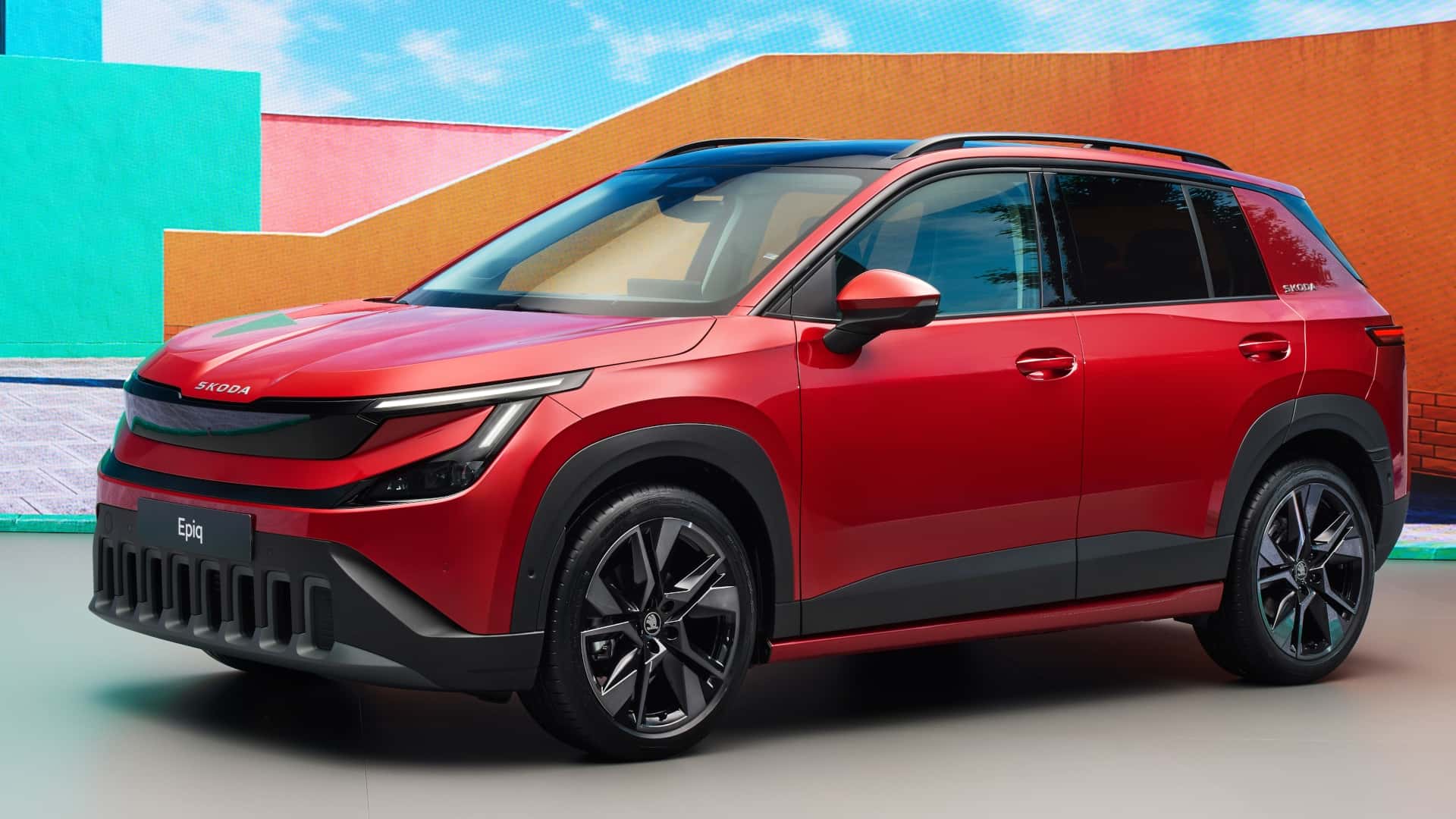
Skoda Epiq’s Battery Strategy: Why LFP Fits the Base Model
The Skoda Epiq arrives at an interesting inflection point for small EVs: buyers want low price, credible range, and fast charging, but the engineering challenge is making those targets coexist in a compact, front-wheel-drive package. Its dual-battery strategy tells the story clearly. The standard pack is a 38.5 kWh lithium iron phosphate (LFP) battery, while higher trims use a 55 kWh nickel manganese cobalt (NMC) pack.
From a battery-materials standpoint, that split is logical:
- LFP is cost-effective, thermally stable, and cycle durable.
- NMC offers higher energy density, which helps maximize range in a limited footprint.
- For a small crossover, the base model’s lower cost likely depends on LFP’s material advantages and simplified pack requirements.
But the real engineering question is not just chemistry selection. It is whether a low-cost LFP pack can support the fast-charging, thermal management, and durability targets expected by mainstream EV buyers.
LFP Battery Behavior Under Fast Charging
LFP chemistry is often described as a “safe and robust” battery option, but its electrochemical behavior creates real challenges at high charge rates. Compared with many high-nickel chemistries, LFP typically shows:
- Lower intrinsic electronic conductivity
- Lower lithium-ion diffusion kinetics
- A flatter voltage profile, which complicates state-of-charge estimation
- A stronger dependence on temperature for charge acceptance
These factors matter most during fast charging. Skoda’s base Epiq 35 reportedly accepts only 50 kW DC, taking about 33 minutes from 10% to 80%. That is not especially aggressive by modern EV standards, and it suggests the charge rate is limited partly to preserve cell health and manage heat.
Ionic Conductivity Bottlenecks
At high current, the transport of lithium ions through:
- the electrolyte,
- the separator pores,
- and the active material interface
can become rate-limiting. In LFP, the olivine crystal structure is stable, but lithium diffusion pathways are not as forgiving as in some higher-conductivity cathode systems. If pack temperature is too low or current is too high, the cell may not be able to insert lithium fast enough into the host structure.
That creates a cascade of issues:
- higher polarization,
- larger voltage drop,
- greater heat generation,
- and increased risk of non-uniform lithiation.
In practical terms, the charging system must maintain the cells in a narrow thermal window to keep ionic conductivity high enough for acceptable charge acceptance.
Thermal Management at Extreme Charge Rates
Fast charging is fundamentally a heat problem. Heat generation in a battery cell at high rate is caused by:
- Ohmic losses in current collectors, tabs, and busbars
- Electrochemical overpotential
- Entropy-related heat during lithium insertion/extraction
- Localized resistive heating from current non-uniformity
Even though the Epiq’s base variant charges at a modest 50 kW, the higher trims reach 90 kW and 105 kW. In a small pack, that can mean a substantial thermal load relative to total energy capacity. The challenge is amplified because the battery pack is compact, mounted in an underfloor location, and must coexist with cabin packaging, crash structure, and low-cost constraints.
Why Liquid Cooling Plates Matter
For this kind of vehicle, liquid cooling plates are the most plausible thermal-control solution. Their role is to:
- remove heat uniformly across the module or cell stack,
- limit peak cell temperature,
- reduce temperature gradients between cells,
- and keep the surcharge of fast charging from accelerating degradation.
A good liquid-cooled design will focus on:
- high contact uniformity between plate and cell/module
- low thermal resistance interface materials
- coolant channel placement that avoids hot spots near tabs and current collectors
- balanced flow distribution across the battery pack
Without this, temperature gradients can create uneven aging and inconsistent charge acceptance. In a low-cost EV, thermal-management simplicity can be as important as peak cooling capacity. The best compromise is often a carefully optimized aluminum cooling plate layout with targeted coolant routing and conservative fast-charge calibration.
Thermal Limits and Charge Tapering
At elevated charge rates, the pack management system must taper current before the cells enter a region where:
- internal resistance rises sharply,
- ionic diffusion slows,
- and lithium plating becomes more likely.
That is why the Epiq’s 55 kWh pack, despite being the fastest-charging version, only reaches 105 kW and still completes 10–80% in about 24 minutes rather than charging at even higher peak power. The system is likely optimized around thermal headroom rather than headline charging speed.
Lithium Plating Risk in LFP Packs
Lithium plating is usually associated with low-temperature fast charging and high current density. It happens when lithium ions cannot intercalate into the anode quickly enough, so metallic lithium deposits on the graphite surface instead. Even though LFP is safer thermally than many chemistries, it does not eliminate plating risk at the anode.
Conditions That Increase Plating Probability
- Low cell temperature during charging
- High charge current relative to anode diffusion rate
- High state of charge, especially above mid-SOC
- Uneven pack temperature distribution
- Aging-related impedance increase
The LFP cathode itself is stable, but the anode and electrolyte are still vulnerable if the pack is charged aggressively in cold weather. If the Epiq’s pack is exposed to winter fast charging, the BMS must manage current very carefully. That means preconditioning, current derating, and tight thermal monitoring.
Why It Matters for Durability
Lithium plating can cause:
- capacity loss,
- impedance growth,
- reduced fast-charge acceptance,
- and dendritic growth in severe cases.
In a cost-sensitive small EV, even modest plating over repeated charging cycles can materially affect warranty risk and customer satisfaction. LFP is highly cycle durable under proper conditions, but poor thermal control can erode those advantages quickly.
Structural Integrity: Mechanical and Electrochemical Coupling
Battery durability is not only about chemistry. Structural integrity under fast charge matters because every thermal cycle creates expansion, contraction, and mechanical stress. In compact EV pack design, the following are key concerns:
- cell swelling over life,
- module frame fatigue,
- plate-to-cell contact degradation,
- cooling plate distortion from hot spots,
- and seal integrity under repeated thermal cycling.
Pack-Level Mechanical Effects
Fast charging raises cell temperature rapidly, and different regions of a pack may warm at different rates. That produces thermal gradients, which can lead to:
- differential expansion between modules,
- stress on welds or busbar joints,
- interface material pump-out,
- and loss of even pressure across the cells.
These issues are especially relevant for LFP cells, which may cycle for many years. If the mechanical architecture does not keep compression and thermal contact stable, the pack may age unevenly even without catastrophic failures.
The Role of Conservative Power Limits
Skoda’s modest base charging power likely reflects more than cost. It also reduces:
- heat flux into the pack,
- stress on cooling hardware,
- plating risk,
- and structural fatigue.
That is a sensible trade-off for a mainstream vehicle where long-term reliability matters more than aggressive DC charging numbers.
Engineering Takeaways
The Epiq’s battery lineup shows a clear balancing act between cost, range, and thermal robustness.
Key points
- LFP is well suited to the base model because of low cost, good safety, and long cycle life.
- Its main weakness is limited ionic conductivity under high current, especially in cold conditions.
- Liquid cooling plates are essential to control temperature rise and maintain uniform cell behavior during fast charging.
- Higher charging powers increase the risk of lithium plating if thermal preconditioning and BMS control are not meticulous.
- Structural reliability depends on minimizing thermal gradients and preserving module compression over life.
The Epiq’s charging figures suggest a deliberately conservative engineering approach. That is likely the right answer for a small, practical EV: not maximum peak power, but a battery-and-thermal system tuned for real-world durability.
Source reference: Industry News