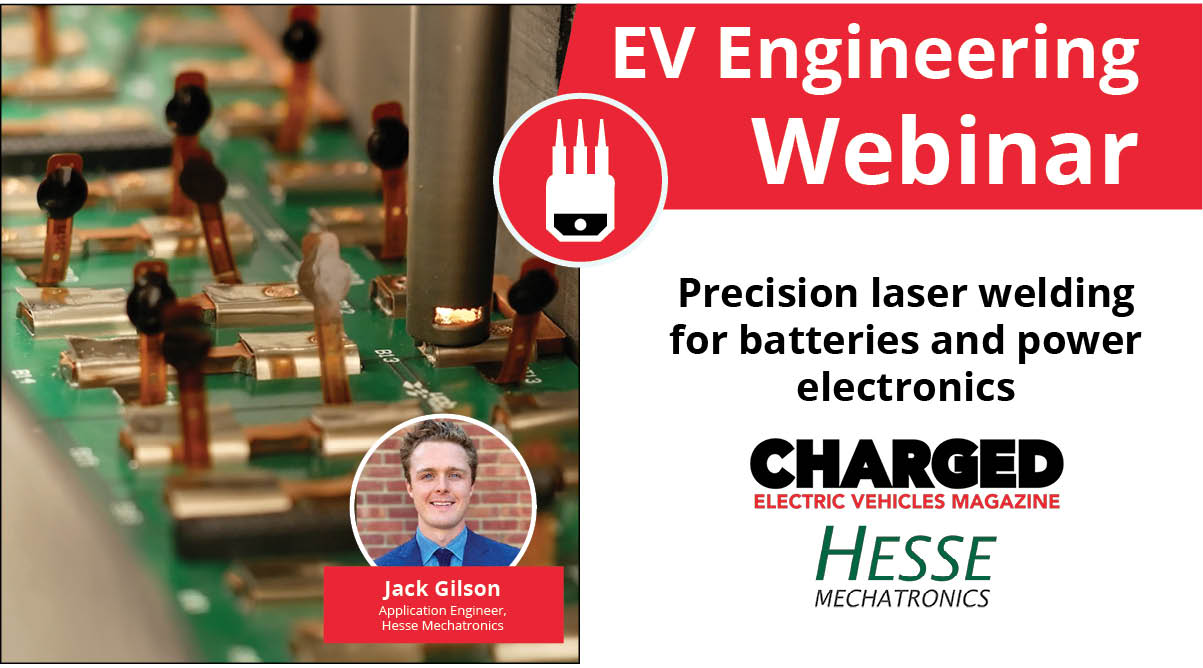
Core Technology Extracted
The article is fundamentally about precision laser welding for EV battery interconnects and power electronics, specifically for:
- Busbar-to-tab joins
- Tab-to-terminal joins
- Power-module interconnects
- Production-grade seam/spot weld formation with inline quality control
From an engineering standpoint, this is not a chemistry article in the strict sense; however, the welding process is tightly coupled to the mechanical, electrochemical, and thermal constraints of the battery architecture, which are largely determined by the cell chemistry and format.
Assumed Cell Chemistry and Intrinsic Limitations
Likely Chemistry Context: LFP vs NMC in Automotive Packs
Because the webinar references busbars, tabs, terminals, and power-module interconnects, the most probable battery context is a high-volume automotive traction pack using one of two dominant chemistries:
- LFP (LiFePO₄) in cost-optimized EVs
- NMC (LiNiMnCoO₂) in higher energy-density platforms
A solid-state architecture is unlikely as the primary assumption here, because the mention of conventional laser welding process strategies, cross-sectional validation, and production-oriented interconnects strongly implies mature prismatic/pouch/cylindrical lithium-ion assembly lines, not a nascent solid-state stack with uncertain join metallurgy and packaging maturity.
LFP: Key Engineering Characteristics
If the pack is LFP-based, the key limitations are:
- Lower specific energy than NMC, requiring larger pack footprint and more parallel interconnects
- Flatter OCV-SOC curve, which complicates SOC estimation and can mask cell imbalance
- Lower thermal runaway propensity, but still significant heat generation under high current
- Higher DC resistance at low temperature, which increases resistive heating and reduces charge acceptance
For welding, the relevance is indirect but important: LFP packs often use larger-format cells and thicker current collectors/interconnects to compensate for lower energy density, increasing joint heat capacity and the need for robust penetration control.
NMC: Key Engineering Characteristics
If the platform is NMC-based, the limitations shift toward performance density and thermal margin:
- Higher energy density but lower thermal safety margin
- Greater sensitivity to overtemperature, lithium plating, and localized hot spots
- More stringent requirements for current distribution uniformity
- Strong dependence on effective cooling and low-resistance interconnects
NMC architectures typically push higher power density and tighter packaging, making laser welding valuable because it can produce low-resistance, narrow HAZ joints with minimal added mass. However, the same compactness amplifies thermal sensitivity at the tabs and busbars.
Why Solid-State Is Not the Likely Baseline
Solid-state batteries introduce different interconnect issues:
- Brittle solid electrolytes
- Interface contact-pressure dependence
- Different tab and sealing schemes
- Join processes often constrained by stack pressure retention and hermetic packaging
A webinar centered on conventional laser welding of tabs, terminals, busbars, and power modules is therefore more consistent with today’s lithium-ion production line reality than a solid-state program.
Laser Welding in Battery Interconnects: Engineering Significance
Functional Role of the Weld
In EV battery systems, the weld is not merely a mechanical joint. It is an electro-thermo-mechanical current-carrying interface whose performance impacts:
- Electrical resistance and I²R loss
- Local self-heating
- Fatigue life under vibration and thermal cycling
- Corrosion susceptibility at interfaces
- Fault propagation under abuse conditions
A poor weld can become a distributed heat source, creating progressive degradation long before catastrophic failure.
Metallurgical Constraints
Laser welding of tabs/busbars usually involves combinations of:
- Aluminum-aluminum
- Copper-copper
- Copper-aluminum
The last case is the most difficult due to:
- Large difference in thermal conductivity
- High reflectivity of Cu at typical laser wavelengths
- Intermetallic formation risk in Cu-Al joints
- Narrow process window for penetration without excessive IMC growth
For EV battery manufacturing, the key goal is to achieve:
- Full nugget continuity
- Minimal porosity
- Controlled intermetallic layer thickness
- Low spatter and minimal HAZ softening
- Repeatable penetration despite surface contamination and fit-up variation
Theoretical Thermal Management Challenges
Heat Generation at the Weld Interface
Laser welding introduces a highly localized heat source. In battery interconnects, this has two major thermal risks:
-
Excessive local temperature rise
- Can damage separator-adjacent regions
- Can degrade polymeric tab insulation or pouch film
- Can alter plating/oxide layers on current collectors
- Incomplete fusion
- Produces high contact resistance
- Causes resistive self-heating in service
- Increases thermal runaway susceptibility under high-current operation
The process window is therefore a tradeoff between penetration depth and thermal collateral damage.
Liquid Cooling Plate Design Implications
Although the article is about welding, the pack-level thermal system determines how sensitive the assembly is to weld-induced or service-induced thermal nonuniformity.
A typical EV battery module uses a liquid cooling plate beneath or adjacent to cells. Design challenges include:
- Thermal contact resistance between cell can/module baseplate and cooling plate
- Nonuniform channel distribution causing uneven coolant velocity
- Local hotspots near high-current tabs that are not efficiently coupled to the cooling path
- Pressure drop vs heat transfer tradeoffs in microchannel or serpentine designs
If the interconnects are located on the top cap or side terminal, the thermal path from the weld hotspot to the coolant may be long and resistance-dominated. That means the weld region can operate as a thermal bottleneck, especially under repeated fast charge/discharge.
Thermal Gradients and Current Collector Anisotropy
Cells experience substantial internal gradients because heat is not generated uniformly:
- Joule heating concentrates near tabs and current collector transitions
- Electrochemical heat generation varies with SOC, C-rate, and temperature
- Current crowding near tab locations creates local heating maxima
In cylindrical cells, single-tab designs materially worsen current crowding. In prismatic or pouch cells, tab placement, multiple tab arrays, or distributed current collection reduce peak current density. Laser-welded busbar joins must be designed to preserve those benefits; otherwise, the joint itself becomes the new current bottleneck.
Tab Cooling vs Surface Cooling
Tab Cooling
Tab cooling directly targets the highest-resistance current-exit regions. Advantages:
- Rapid removal of hotspot heat
- Better management of current-crowding-induced temperature rise
- Lower peak temperature at terminals during high C-rate operation
However:
- Tabs are geometrically small and difficult to cool uniformly
- Additional cooling hardware adds mass, complexity, and sealing challenges
- Thermal interface design is delicate due to motion, vibration, and fatigue concerns
Surface Cooling
Surface cooling, via cold plates or module surfaces, is easier to implement but is less effective for tab-driven hotspots because the heat must propagate through:
- Tab material
- Weld nugget
- Busbar
- Terminal structure
- Pack housing interfaces
This adds significant thermal resistance. As a result, surface cooling alone can be insufficient when interconnect current density is high.
Process-Induced Thermal Distortion
Laser welding can produce:
- Local warpage
- Residual stress
- Contact loss due to distortion
- Microcracking in brittle coatings or intermetallic-rich zones
For battery assemblies, even a few tens of microns of distortion can alter stack compression, tab alignment, or busbar seating, which then amplifies contact resistance and thermal deviation during operation.
Fast-Charging Constraints
Ionic Transport Limits Are Still the Governing Physics
Fast charging is often marketed as a power electronics or charging-station problem, but the true limit is the cell’s internal transport capability.
The limiting mechanisms include:
- Lithium-ion diffusion in the solid electrode particles
- Electrolyte ionic conductivity
- Charge-transfer kinetics at the electrode/electrolyte interface
- Thermal rise reducing effective conductivity margins
- Concentration polarization near the anode surface
At high C-rates, the cell voltage rises due to polarization, and the anode potential can approach 0 V vs Li/Li⁺, which drives lithium plating risk.
Lithium Plating Risk
This is the dominant fast-charge failure mode for graphite-anode cells.
Conditions that increase plating probability:
- Low temperature
- High SOC
- High charge current
- Poor thermal uniformity
- Excessive cell-to-cell imbalance
- Elevated internal resistance from aging or poor interconnects
If the tab/busbar weld adds resistance, the resulting voltage drop and heat generation are not merely local reliability issues; they can also create pack-level charge nonuniformity. Cells near higher-resistance paths may receive different effective charge current, worsening imbalance and pushing some cells into plating-prone regimes earlier than others.
Why Welding Quality Matters for Fast Charging
A low-resistance, repeatable weld is essential because pack-level fast charging amplifies tiny resistive differences.
Impact pathways:
- Higher joint resistance → localized heating
- Higher heating → elevated cell temperature gradients
- Uneven temperature → uneven charge acceptance
- Uneven charge acceptance → cell imbalance
- Imbalance → earlier voltage limit hit or plating onset
So laser weld metallurgy is not isolated manufacturing trivia; it is directly linked to charge-rate capability.
C-Rate Constraints and Thermal Coupling
At elevated C-rates, cell temperature can rise quickly. This affects:
- Electrolyte ionic conductivity
- SEI stability
- Diffusion coefficients in active materials
- Internal resistance growth during the charging event
If the thermal system cannot keep the cell within a narrow temperature band, the pack control system must derate charging current. In practice, fast-charging performance depends on the combined optimization of cell chemistry, electrode design, interconnect resistance, and thermal architecture.
Engineering Interpretation of the Webinar’s Technical Focus
Why Inline Monitoring Matters
The webinar’s mention of inline monitoring and process validation signals a manufacturing concern with:
- Weld depth control
- Expulsion detection
- Contour/geometry statistics
- Real-time defect detection
- Correlation of weld signatures to electrical resistance
For battery interconnects, acceptable appearance is insufficient. Process capability must be correlated to:
- Milliohm-level resistance distribution
- Fatigue endurance
- Thermal cycling stability
- Abuse tolerance under overcurrent
Cross-Sectional Analysis as a Validation Tool
Cross-sections reveal:
- Nugget penetration consistency
- Intermetallic thickness in dissimilar joins
- Porosity and void fraction
- HAZ width
- Root fusion and underfill
For copper-aluminum battery interconnects, this is particularly critical because a visually acceptable weld may still have excessive brittle IMC formation, leading to crack initiation under vibration.
Conclusion
The article points to precision laser welding as a critical enabling manufacturing technology for EV battery and power-electronics interconnects. From an engineering perspective, the underlying system is most likely a conventional lithium-ion traction battery, probably LFP or NMC, with no strong indication of solid-state relevance.
The technical significance lies in three coupled domains:
-
Cell chemistry constraints
- LFP emphasizes lower energy density and higher ohmic losses at low temperature
- NMC emphasizes thermal sensitivity and higher plating/abuse risk
- Solid-state would require different join strategies and is less likely here
-
Thermal management
- Laser welds create localized heat-affected zones that must be integrated into the broader cooling architecture
- Liquid cooling plates are effective only if thermal contact and current-path design are optimized
- Tab hotspots are often poorly served by surface-only cooling
- Fast-charging performance
- Limited by ionic transport, polarization, and lithium plating risk
- Interconnect resistance directly influences charge uniformity and thermal gradients
- Weld quality therefore affects not just reliability, but usable fast-charge capability
If you want, I can also convert this into a teardown-style engineering memo with sections for failure modes, design tradeoffs, and manufacturability risks.