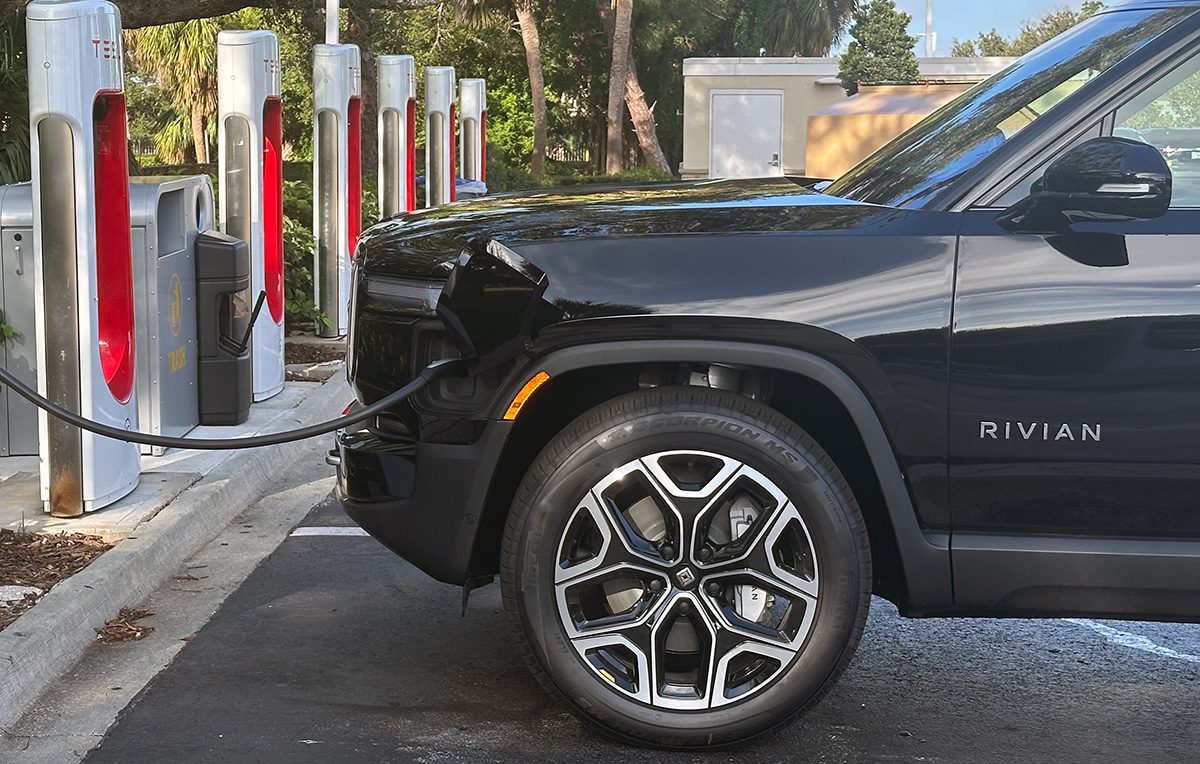
Technical Context: What This Funding Implies for EV Battery and Charger Engineering
The article is not about cell design directly, but about the deployment of public DC fast charging infrastructure ≥150 kW, which has strong implications for the battery technologies that must interface with these chargers. From an engineering standpoint, these incentives are effectively a push toward high-power battery charging ecosystems, where pack design, thermal regulation, and electrochemical limits become the real bottlenecks.
From the battery engineer’s perspective, the relevant question is not “how many chargers are being installed,” but what battery chemistries and pack architectures can survive repeated high-C-rate charging without unacceptable degradation, plating, or thermal non-uniformity.
Assumed Cell Chemistry and Intrinsic Limitations
Likely chemistry landscape
For public DC fast charging at 150 kW and above, the dominant chemistries in the field are still:
- NMC/NCA in higher-energy passenger EVs
- LFP in volume-focused, cost-sensitive vehicles
- Emerging but not yet dominant:
- High-manganese variants
- Silicon-enhanced graphite anodes
- Solid-state prototypes, not yet broadly deployed in public infrastructure ecosystems
Given the article’s focus on broad public deployment rather than ultra-high-end mobility, the practical assumption is that the charger fleet must support mixed-fleet compatibility, meaning both LFP-based and NMC-based packs will be common users.
LFP: strengths and engineering limitations
LFP is increasingly favored for public fast-charging ecosystems because of:
- Better thermal stability
- Lower oxygen release risk under abuse
- Lower material cost
- Good cycle life under moderate charge profiles
But its intrinsic limitations are significant in fast-charge duty:
- Lower practical energy density than NMC/NCA
- Flatter OCV-SOC curve, which complicates accurate state-of-charge estimation near mid-SOC and can affect BMS charge termination logic
- Higher polarization at low temperature, which increases negative electrode potential during charge and raises lithium plating risk
- Charge acceptance is not governed only by cathode stability; the graphite anode and electrolyte transport still dominate at high C-rate
In short, LFP is thermally more forgiving, but it is not inherently fast-charge immune. At elevated C-rate, the limiting phenomenon remains lithium ion transport in the porous electrode stack and through the separator/electrolyte system.
NMC: higher energy, tighter fast-charge constraints
NMC, especially high-nickel variants, is more sensitive to fast charging due to:
- Greater thermal and structural sensitivity at high state of charge
- Faster impedance growth under repeated high C-rate profiles
- More pronounced heat generation from both ohmic and entropic sources
- Stronger dependence on precise thermal management and voltage control windows
At fast-charge power levels, NMC packs typically operate with tighter BMS safeguards because:
- Cathode cracking and microstructural degradation accelerate with high SOC and temperature
- Electrolyte oxidation becomes more relevant at high upper cutoff voltages
- Cell-to-cell imbalance is more consequential when charging currents are very high
Solid-state: theoretical advantages, practical bottlenecks
Solid-state chemistries are often positioned as the solution to fast charging, but from an engineering standpoint the public charging ecosystem is not yet built around them.
Potential advantages:
- Higher thermal stability
- Reduced flammability
- Potentially improved lithium metal compatibility
However, the limitations are still severe:
- Solid electrolyte interfacial resistance
- Interfacial contact evolution under stack pressure
- Crack propagation and contact loss during cycling
- Rate capability still constrained by ion transport across interfaces
- Thermal gradients can create localized mechanical stress even if the electrolyte itself is nonflammable
Thus, even if solid-state cells enter the market, charger-side fast-charge power alone does not eliminate electrochemical constraints. The bottleneck shifts from flammable liquid electrolyte behavior to interface kinetics, stack pressure management, and conductive pathway continuity.
Theoretical Thermal Management Challenges
The deployment of 150 kW+ DC fast chargers implies repeated exposure of battery packs to high heat flux during charging. Thermal management becomes a coupled electro-thermal problem rather than a simple heat removal issue.
Heat generation mechanisms during fast charge
Key heat sources include:
- I²R ohmic heating in current collectors, tabs, busbars, separator, electrolyte, and contact interfaces
- Reaction overpotential losses due to charge-transfer resistance at the anode/cathode interfaces
- Concentration polarization, especially at elevated C-rates
- Entropic heat, which can be exothermic or endothermic depending on SOC and chemistry
At very high C-rates, the heat is not uniformly distributed. Local hotspots appear near:
- Tabs
- Edge regions
- Areas of non-uniform wetting
- Regions with lower compression or poorer thermal contact
Liquid cooling plate design constraints
For modern EV packs, liquid cooling plates remain the dominant pack-level heat extraction method. But at fast charging, their effectiveness is limited by spatial thermal resistance and flow distribution.
Critical engineering concerns:
1. Coolant channel geometry
- Serpentine channels improve residence time but can increase pressure drop
- Parallel channels reduce pressure drop but are prone to flow maldistribution
- Microchannel plates increase heat transfer coefficient, but are sensitive to fouling and manufacturing variation
2. Through-plane vs. in-plane heat flow
- The cell stack is often thermally anisotropic
- Heat must travel through:
- jelly roll or stacked electrode structure
- pouch or prismatic enclosure
- thermal interface material
- cooling plate wall
- Each interface adds resistance, often making the cooling plate only part of the solution
3. Contact resistance
Even with a good coolant design, poor mechanical contact between cell module and cold plate can dominate total thermal resistance. Small delaminations or uneven compression can create hotspots that accelerate aging.
Thermal gradients and cell imbalance
Fast charging generates temperature gradients within cells and across the pack. These gradients are technically important because they create:
- Uneven local current density
- SOC divergence between parallel cells
- Accelerated aging in warmer cells
- Different lithium plating susceptibility across the module
A 5–10 °C local gradient can substantially alter reaction kinetics and transport properties. The warmer region may charge faster but age faster; the cooler region may appear safer thermally but is actually more vulnerable to lithium plating because of reduced diffusivity and kinetics.
Tab cooling vs. surface cooling
This is one of the most important architectural distinctions in fast-charge thermal engineering.
Surface cooling
Common in pouch or module-integrated plate systems:
- Heat is removed from the broad face of the cell
- Works well for average pack thermal management
- Less effective for tab-dominated heat generation
Limitation:
- Tabs often become the hottest point during fast charge because current density is concentrated there
- Surface cooling may not extract heat rapidly enough from the tab region
Tab cooling
Tab cooling or tab-integrated heat sinking can be especially valuable at very high charge rates.
Advantages:
- Direct removal of the hotspot near electrical terminals
- Reduces local overtemperature and resistance rise
- Can improve fast-charge durability by limiting thermal runaway precursors
Engineering challenge:
- Harder packaging
- Higher manufacturing complexity
- Need for electrically isolated yet thermally conductive interfaces
- Risk of stress concentration near welds and terminal interfaces
For high-power public charging, an optimized solution often requires hybrid cooling, where surface cooling handles bulk heat while localized tab cooling manages hotspot suppression.
Fast-Charging Constraints: Electrochemical and Transport Limits
Ionic conductivity and electrolyte transport
At ≥150 kW charging power, the battery is typically forced into a regime where transport limitations dominate. The main bottleneck is not simply external charger power, but the internal ability of the cell to move lithium ions fast enough.
Key constraints:
- Electrolyte ionic conductivity falls at low temperature
- Tortuosity in porous electrodes limits ion migration
- Separator transport resistance increases with high current density
- Thick electrodes designed for energy density often sacrifice rate capability
This is why high-energy cells are usually less fast-charge tolerant than cells optimized for power.
Lithium plating risk
Lithium plating is the primary degradation and safety concern in aggressive fast charging.
Mechanism:
- When anode potential drops too close to 0 V vs. Li/Li+, lithium ions cannot intercalate into graphite fast enough
- Metallic lithium deposits on the anode surface instead
- The plated lithium may be:
- irreversible dead lithium
- dendritic, increasing short-circuit risk
- reactive with electrolyte, consuming cyclable lithium and forming SEI growth
Conditions that increase plating risk:
- Low temperature
- High charge current
- High SOC
- High anode impedance
- Non-uniform current distribution
- Aged cells with thicker SEI or pore blockage
This is why charger power alone does not guarantee fast charging. The vehicle BMS must negotiate a charge power envelope based on:
- cell temperature
- SOC
- internal resistance
- pack age
- cell chemistry
- instantaneous voltage response
C-rate implications
A 150 kW charger may correspond to very different C-rates depending on pack size:
- Large-pack SUV or truck: moderate C-rate, possibly manageable
- Small-pack compact EV: extremely high effective C-rate, much more stressful
This is a critical point for infrastructure planning: the charger rating is not the same as the battery’s charge acceptance rating. The actual electrochemical stress is vehicle-dependent.
Charge taper and BMS control
At high SOC, the BMS must reduce charge current to avoid:
- voltage overshoot
- plating
- thermal runaway margin reduction
- excessive cathode stress
Thus, the last portion of charging is often bottlenecked by battery safety rather than charger availability. In practice, “fast charge” performance depends on the entire system curve, not the peak power number.
Engineering Interpretation of the Infrastructure Push
From a battery teardown and systems engineering perspective, this funding signals an expansion of charge opportunities that will increasingly expose weaknesses in:
- battery thermal path design
- cell tab and collector architecture
- electrolyte low-temperature conductivity
- pack-level current distribution uniformity
- BMS charging algorithms
The infrastructure itself does not solve fast-charging limits; it increases the pressure on OEMs to:
- improve anode fast-ion transport
- reduce cell impedance
- engineer better module cooling
- manage thermal gradients more precisely
- implement charge-acceptance-aware software control
Bottom-Line Technical Assessment
Public deployment of 150 kW-class DC fast charging is only viable at scale if vehicle battery systems can tolerate repeated high-C-rate events without accelerated degradation. The most plausible cell chemistries are LFP and NMC, each with different tradeoffs:
- LFP: safer, longer cycle life, but still limited by low-temperature kinetics and transport bottlenecks
- NMC: higher energy density, but more thermally and chemically sensitive under aggressive fast charging
- Solid-state: promising, but not yet mature enough to remove present-day pack thermal and rate constraints
The dominant engineering challenges remain:
- Heat extraction under non-uniform internal generation
- Minimizing thermal gradients across cells and tabs
- Preventing lithium plating during high C-rate charge
- Maintaining acceptable impedance and uniform current distribution over life
If you want, I can also convert this into a battery teardown-style report format with sections like cell architecture implications, failure modes, and OEM design recommendations.