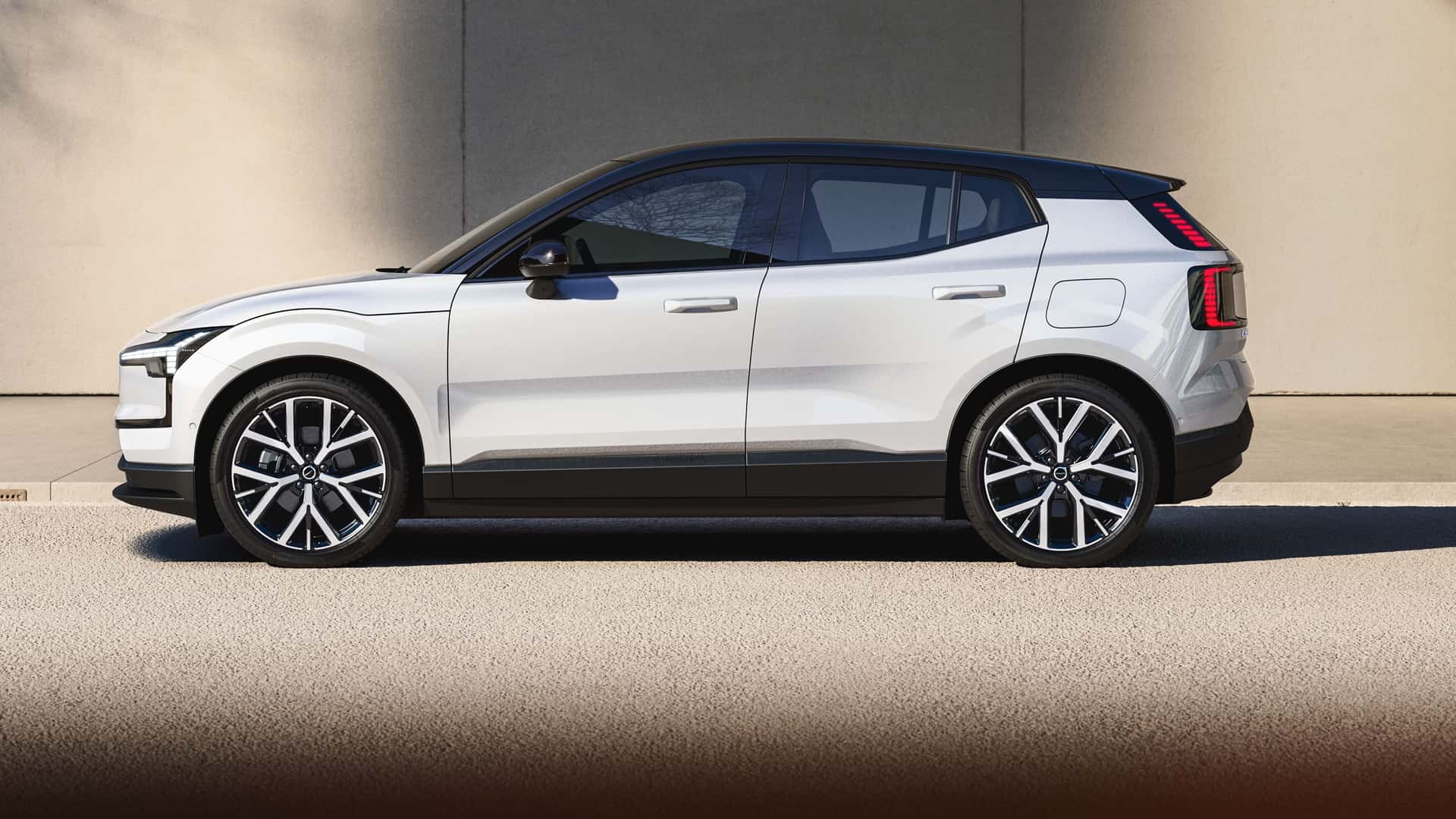
Volvo’s Next Affordable EV: What the Architecture Shift Means for LFP, Fast Charging, and Battery Durability
Volvo’s plan to replace the EX30 with a larger, similarly priced EV is more than a product-cycle adjustment. It signals a broader platform strategy shift: moving down-cost EVs onto a more scalable electrical architecture with shared battery systems, shared software, and a more unified thermal and charging framework. For battery engineers, the interesting question is not the badge on the tailgate but how the underlying pack chemistry, cooling strategy, and charge acceptance behavior will perform when the goal is low cost, fast charging, and high volumetric efficiency in a compact vehicle.
The likely answer is that batteries such as LFP will remain central to this segment. LFP offers strong cycle life, lower material cost, and improved thermal stability, but it also brings a set of engineering tradeoffs that become more visible at high charge rates and in cold-weather operation. As entry-level EVs evolve toward broader platform commonality, the battery pack becomes the main determinant of whether the car feels cheap, robust, or frustrating in real-world use.
Why LFP Fits the Cost and Safety Target
LFP battery chemistry is attractive for an accessible EV because it avoids nickel and cobalt, offers long cycle life, and has a comparatively stable crystal structure during abuse or thermal stress. In a platform designed to scale across segments, that stability matters because it allows engineering teams to simplify certain safety margins without sacrificing durability.
Key advantages of LFP in compact EVs
- Lower active material cost than nickel-rich chemistries
- Strong cycle life under frequent daily charging
- Better thermal runaway resistance
- Good tolerance for high state-of-charge parking compared with some high-nickel cells
However, LFP’s strengths do not eliminate charging and thermal constraints. In fact, its lower nominal voltage and flatter open-circuit voltage curve make state-of-charge estimation more difficult, especially when the car must charge quickly and predictably across a wide temperature range.
Ionic Conductivity: The Hidden Bottleneck
Fast charging is often limited not by the charger’s power rating, but by the battery’s ability to move lithium ions through electrolyte, separator, and electrode structure without generating damaging concentration gradients. This is where ionic conductivity becomes a limiting factor.
In LFP cells, the electrochemical system must manage:
- Lithium-ion transport through the electrolyte
- Diffusion through the cathode particles
- Charge transfer at the electrode-electrolyte interface
- Electron transport through conductive networks
At moderate charge rates, these mechanisms stay in balance. At extreme rates, the system becomes diffusion-limited. Local depletion of lithium ions near the anode surface can cause large overpotentials, especially in cold conditions or when the cell is charged near high state of charge. That raises the risk of lithium plating.
Why ionic conductivity collapses under fast charging
- Electrolyte conductivity drops at low temperatures
- Interfacial impedance rises as temperature falls
- Thick electrodes increase tortuosity and slow ion transport
- High areal loading improves cost and energy density but worsens concentration gradients
For an entry-level EV, the temptation is to increase cell energy density and reduce pack cost by using larger-format cells or fewer cooling interfaces. But this can reduce the battery’s tolerance for extreme charging power unless the thermal design is excellent.
Lithium Plating Risk Under High-Rate Charging
Lithium plating occurs when the anode potential falls below 0 V vs. Li/Li+, causing metallic lithium to deposit on the graphite surface instead of intercalating into it. This is one of the most important durability concerns in fast charging, particularly for compact EVs that may use smaller packs and therefore higher C-rates during DC fast charging.
Conditions that increase plating risk
- Cold cell temperature, especially below about 15°C
- High charging current near low SOC when diffusion is already stressed
- Poorly balanced cell temperature across the pack
- Aggressive charging to high SOC in short time windows
- Aging-related impedance rise
The practical consequence is not just temporary capacity loss. Plated lithium can become electrically isolated, form dendrites, accelerate SEI growth, and reduce cycle life. In severe cases, it also becomes a safety concern.
For LFP cells, plating risk is sometimes underestimated because the chemistry is thermally stable. But thermal stability is not the same as electrochemical immunity. An LFP pack can be safer in a fire scenario and still suffer severe degradation if charging control and thermal conditioning are poorly executed.
Thermal Management at Extreme Rates
This is where the cooling system becomes a core enabler of battery performance rather than a support subsystem. At high charge rates, the pack generates heat from:
- Ohmic losses in current collectors, tabs, busbars, and interconnects
- Internal resistance of the cells
- Entropic heat, which can be positive or negative depending on SOC and chemistry
- Localized heating near tabs and manifold regions
If that heat is not removed quickly and evenly, cell-to-cell temperature spread increases. That creates uneven aging, inconsistent charge acceptance, and elevated plating risk in colder cells.
What liquid cooling plates must do
Liquid cooling plates are commonly used because they offer much higher heat removal capability than air cooling and can be integrated directly beneath or between cells. Their job is not only to reduce peak temperature, but to minimize thermal gradients.
A well-designed liquid cooling plate system should:
- Keep mean cell temperature in the optimal charge window
- Limit max-to-min temperature spread across the pack
- Extract tab and edge hotspot heat effectively
- Provide consistent performance during sustained DC fast charging
- Support preconditioning before fast charge arrival
Design priorities for high-rate charging
- High local heat transfer coefficient near cell surfaces
- Uniform coolant distribution across parallel channels
- Low pressure drop to keep parasitic pump power manageable
- Good thermal contact resistance management via interface materials
- Control logic that integrates pack temperature, coolant temperature, and route planning
In a smaller EV platform meant to be affordable, thermal management becomes a balancing act. A lower-cost pack may rely on fewer modules or simplified plumbing, but if the liquid cooling plates are undersized, the battery will have to throttle charge power more often, which undermines the value proposition.
Structural Integrity Under Repeated Fast-Charge Stress
Fast charging does not only create electrochemical stress; it also introduces mechanical stress. Cell swelling, electrode breathing, and thermal expansion all place load on the pack structure.
In LFP cells, the volume change during cycling is generally manageable, but at high current density and elevated temperature gradients, the mechanical picture worsens.
Structural concerns include
- Repeated expansion and contraction of cells
- Compression set in thermal interface pads
- Weld and tab fatigue at high current points
- Module frame distortion over time
- Coolant plate bowing or mismatch due to thermal cycling
If the cooling plate or module frame fails to maintain even contact pressure, the thermal resistance increases, causing a local hotspot. That hotspot then accelerates impedance growth and raises plating risk in the adjacent cells. The failure mode is circular: thermal nonuniformity causes electrochemical imbalance, which increases mechanical and thermal stress.
What This Means for Volvo’s Next Affordable EV
If Volvo is aiming to deliver an EV that is “similar” in price to the EX30 but larger and more capable, the battery architecture will likely need to be highly modular and thermally robust. That implies:
- A chemistry like LFP for cost and cycle life
- Strongly integrated liquid cooling plates
- Software that actively preconditions cells before fast charging
- Conservative charge curves at low temperatures
- Cell-to-cell balancing strategies tuned for flat-voltage chemistry
The engineering challenge is not simply to make the pack cheaper. It is to make it tolerant of real-world misuse, winter charging, and repeated high-power sessions without premature degradation. In that sense, the battery system becomes the decisive differentiator.
Bottom Line
An affordable EV built on a scalable platform can succeed only if its pack is designed for both energy and abuse tolerance. LFP battery technology offers a strong base, but fast charging exposes its limitations in ionic conductivity and lithium plating susceptibility. The thermal management system, especially liquid cooling plates, is what allows the chemistry to deliver on its promise.
The takeaway for this next-generation Volvo is straightforward: cost control will matter, but so will heat extraction, temperature uniformity, and charge-rate management. Without those, even a well-positioned EV can become a compromised product.
Source reference: Industry News