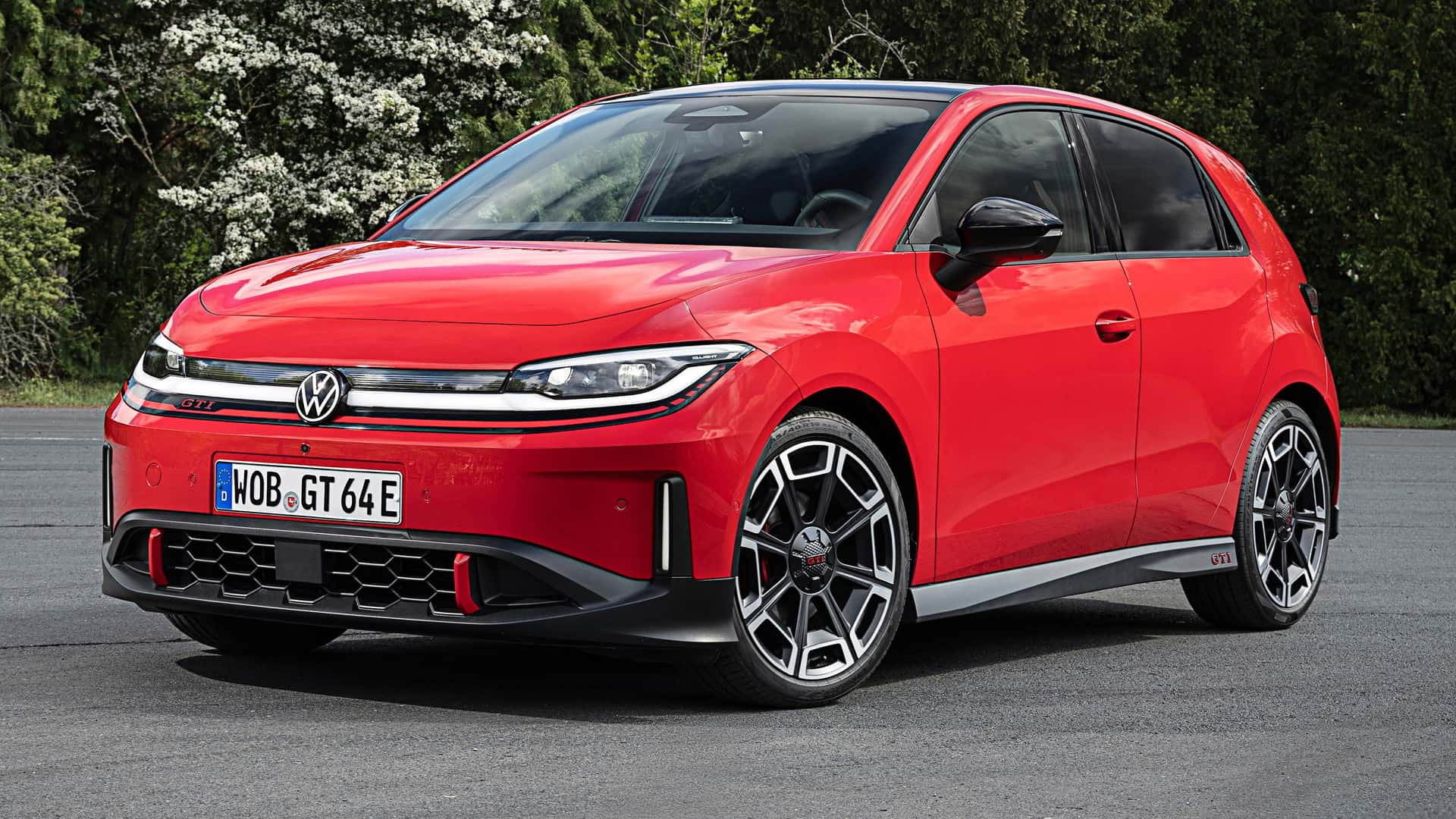
Electric Hot-Hatch Performance Is Limited by Electrochemistry, Not Just Motor Output
Volkswagen’s ID. Polo GTI illustrates a familiar EV engineering tradeoff: as vehicle dynamics become more aggressive, the battery system—not the inverter, motor, or tires—often becomes the primary limiter. A 223-hp front-drive hatchback with a 52 kWh pack and 105 kW DC fast-charging capability is not especially extreme by today’s standards, yet its “GTI” positioning invites repeated high-power launch events, hard regenerative braking, and frequent fast-charging use. Those conditions place the cell chemistry, thermal architecture, and mechanical package under meaningful stress.
For battery engineers, the key questions are straightforward:
- Can the cells sustain high ionic flux without excessive polarization?
- Can the pack reject heat quickly enough during repeated high-C-rate events?
- Can the electrodes remain structurally stable under fast charge and fast discharge?
- How do these constraints influence the long-term durability of an LFP battery or NMC-based alternative in a compact EV platform?
Ionic Conductivity Limits Fast Charge More Than Nameplate Power Suggests
At extreme rates, battery performance is increasingly governed by ion transport across multiple interfaces rather than by nominal pack power alone. The main bottlenecks are:
1. Bulk electrolyte transport
During fast charging, lithium ions must migrate rapidly through the electrolyte. If local concentration gradients become steep, the cell develops concentration polarization, which raises overpotential and reduces charge acceptance.
2. Charge transfer at the electrode/electrolyte interface
Even if the electrolyte can transport ions, the interfacial kinetics at the graphite anode and cathode surfaces can limit insertion speed. Higher current density increases reaction impedance and causes non-uniform lithiation.
3. Solid-state diffusion inside active particles
Lithium must diffuse through the solid active material once it is intercalated. At high C-rates, surface concentration can spike while the particle core lags behind, producing stress gradients and local mechanical strain.
4. Separator and current collector constraints
The separator must maintain ionic access while avoiding excessive resistance. Meanwhile, thin current collectors reduce mass but can become more vulnerable to thermal and mechanical distortion if the pack is cycled aggressively.
For a compact EV like the ID. Polo GTI, the relatively small 52 kWh battery helps reduce mass and can improve transient performance, but it does not eliminate these transport limitations. In fact, compact pack design can intensify thermal challenges because less volume is available for heat spreading and liquid-cooling hardware.
Heat Generation at Extreme Rates: Where the Energy Goes
Heat generation in a battery pack rises sharply during high-power operation. The dominant contributors are:
- Ohmic heating from internal resistance
- Reaction heat from electrochemical overpotentials
- Entropic heat, which can be positive or negative depending on SOC and chemistry
- Contact resistance at tabs, welds, busbars, and interconnects
At fast charging rates like a 10–80% fill in roughly 24 minutes, the heat load is concentrated in the first half of the charge where lithium insertion is most demanding and diffusion limitations are most pronounced. During repeated acceleration, the same issues appear in reverse: the pack experiences high discharge current, while regenerative braking can create localized charge spikes.
Why heat matters so much
Temperature affects nearly every degradation pathway:
- Higher temperature improves ionic mobility and reduces resistance
- But excessive temperature accelerates electrolyte decomposition and SEI growth
- Non-uniform temperature leads to cell imbalance, aging spread, and safety risk
- Rapid thermal cycling increases mechanical fatigue in electrodes and tabs
This is why thermal management is not just about avoiding overheating; it is about keeping cell-to-cell gradients tight enough to preserve uniform electrochemical behavior.
Liquid Cooling Plates Are the Core Enabler of Repeatable Performance
In modern EV packs, liquid cooling plates remain the most effective method for controlling high-rate heat generation. Their role goes beyond “keeping the pack cool”; they shape the usable electrochemical window of the entire system.
Functions of liquid cooling plates
- Remove heat from the cell stack or prismatic module quickly and uniformly
- Minimize axial and lateral temperature gradients across cells
- Stabilize battery temperature before, during, and after fast charging
- Enable more aggressive charge and discharge calibration without derating
Design considerations
For a platform like the ID. Polo GTI, a compact architecture likely benefits from thin, high-conductance plates positioned close to cell surfaces. The engineering challenge is balancing:
- Thermal conductivity
- Pressure drop and coolant flow uniformity
- Mass penalty
- Packaging density
- Serviceability and leak robustness
If the thermal path from cell core to coolant is too long, the cell surface may remain within limits while the core becomes significantly hotter. That hidden temperature rise is dangerous because degradation and plating risk are driven by the internal temperature, not just what an external sensor sees.
Lithium Plating Risk Rises Sharply During Fast Charging
Lithium plating is one of the most important degradation concerns in high-rate charging. It occurs when lithium ions reach the graphite anode surface faster than they can safely intercalate into the graphite lattice. Instead of being absorbed, metallic lithium deposits on the surface.
Conditions that promote plating
- Low cell temperature
- High charging current
- High state of charge
- Elevated anode polarization
- Non-uniform current distribution within the cell
This is especially relevant for compact EVs with fast-charge targets. A 105 kW peak charge rate is not exceptional, but if it is sustained into higher SOC regions, the anode potential can approach the lithium deposition threshold.
Consequences of lithium plating
- Loss of cyclable lithium and capacity fade
- Increased impedance
- Greater heat generation in later cycles
- Potential formation of dendritic structures
- Safety risk if plated lithium becomes internally reactive
Chemistry dependence
An LFP battery generally offers strong thermal stability and long cycle life, but its lower nominal voltage means more cells are often needed in series for the same pack voltage, increasing system complexity. LFP also tends to have lower gravimetric energy density than high-nickel chemistries, which can support robust safety but may not inherently solve fast-charge plating risk. In practice, an LFP pack can still plate if charged too aggressively when cold or poorly cooled.
Structural Integrity Under Repeated High-C-Rate Use
Fast charging and spirited driving do not only affect chemistry; they also challenge mechanical structure. The cell electrodes repeatedly expand and contract as lithium intercalates and de-intercalates.
Main structural concerns
- Particle cracking in active materials under repetitive strain
- Loss of conductive network continuity in the electrode
- Delamination between coating, binder, and current collector
- Tab weld fatigue from current pulses and thermal cycling
- Module and pack enclosure stress from differential expansion
In performance-oriented EVs, high lateral acceleration and regenerative braking can layer mechanical shock on top of thermal stress. If the pack mount, potting, or compression strategy is weak, even small dimensional changes can cause contact resistance growth or local hotspot formation.
Why this matters for hot hatches
A GTI badge implies repeated enthusiastic use. That means the battery is not optimized only for one sprint or one charge event; it must remain stable across:
- Repeated launches
- Back-to-back acceleration runs
- Frequent partial fast charges
- Variable ambient temperatures
- Aggressive regenerative braking events
Engineering Mitigations
To control high-rate degradation, the pack designer typically combines electrochemical and thermal strategies:
- Lower-resistance cell design with improved anode conductivity
- Electrolyte formulations tuned for high-rate ion transport
- Conservative charge curves at low temperature
- Preconditioning before DC fast charging
- Liquid cooling plates with high local heat flux removal
- Real-time current derating based on cell temperature and polarization
- Module compression architecture to reduce mechanical fatigue
Conclusion
The technical ceiling of an electric GTI is set less by motor power than by the pack’s ability to move ions, reject heat, and preserve structural stability under aggressive use. Fast charging, hard acceleration, and sustained regeneration all push the battery toward the same failure modes: polarization, localized heating, lithium plating, and mechanical degradation.
A well-designed thermal management system, especially one built around efficient liquid cooling plates, is essential to hold the battery inside its safe operating envelope. For an EV hot hatch, that is what separates short-term excitement from long-term durability.
Source reference: Industry News