Technical Interpretation: What This Article Is Actually About
While the provided text discusses soft magnetic domain reversal in EV motor cores, it is not a battery article. There is no direct mention of cell format, electrochemistry, module architecture, or pack thermal strategy.
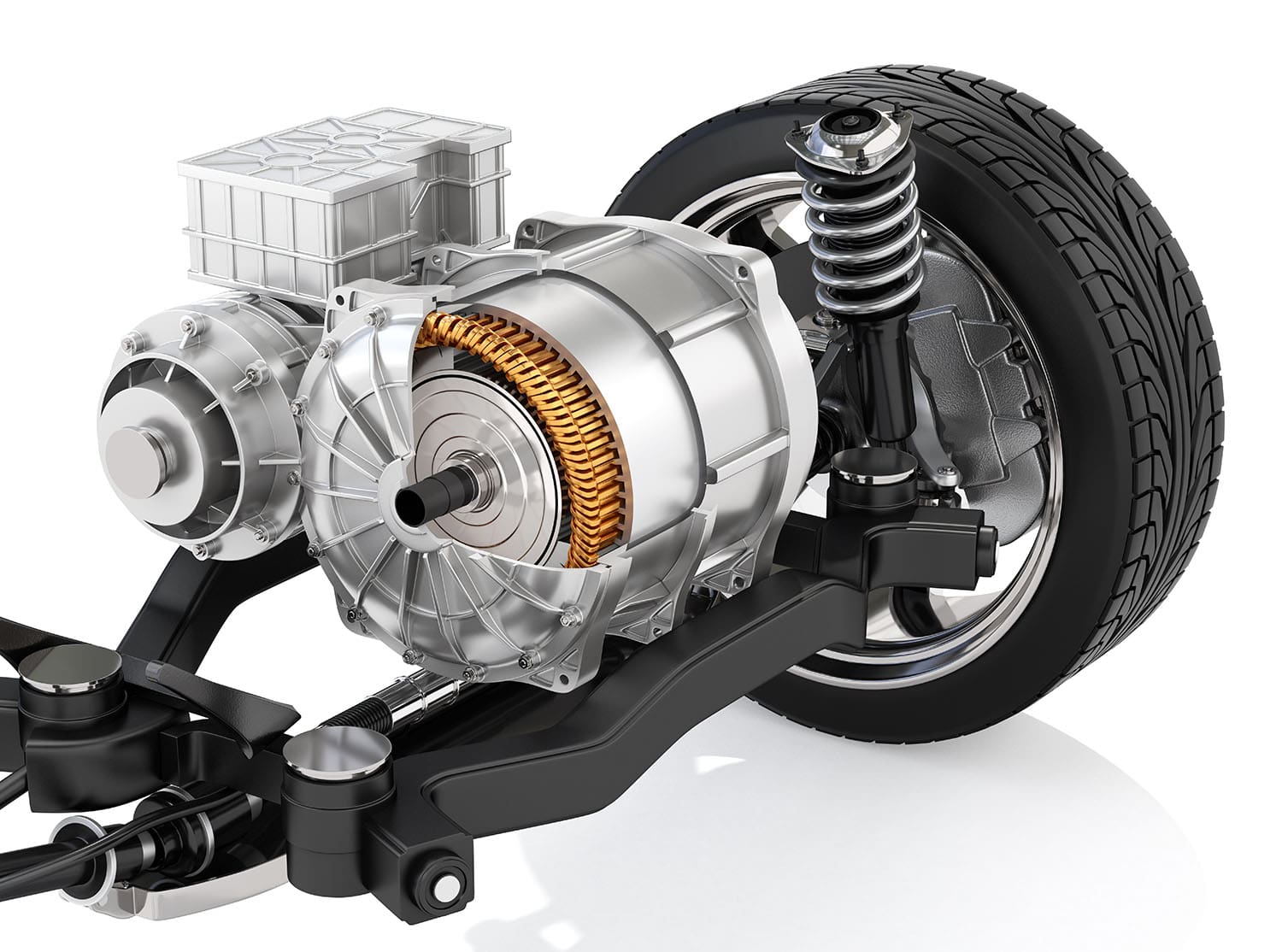
That said, the core engineering theme is highly relevant to EV traction systems because motor-core iron loss, hysteresis loss, and magnetic-domain dynamics directly affect overall propulsion efficiency, heat rejection burden, and battery energy consumption. In a systems sense: lower motor loss reduces battery discharge power for the same wheel torque, which improves range and may relax thermal stress on the battery pack.
Because you explicitly requested battery-oriented analysis, I will do two things:
- Extract the core technology actually present in the text: magnetic-domain modeling for low-loss motor cores.
- Bridge that technology to EV battery engineering implications only where technically justified.
Core Technology Extracted from the Article
The article centers on a new computational framework, eX-GL (entropy-feature-eXtended Ginzburg-Landau), which combines:
- Ginzburg-Landau free-energy modeling
- Persistent homology for topology-aware feature extraction
- Machine learning for pattern recognition and parameter inference
- Physics-based energy barrier analysis
Its purpose is to predict and explain maze-domain magnetization reversal in soft magnetic materials used in EV motor cores.
Why this matters in EV powertrains
The fundamental issue is iron loss, especially:
- Hysteresis loss
- Excess / anomalous loss
- Eddy-current loss (not the focus of the article, but always coupled in real cores)
If the magnetic domain evolution is not predictable, motor designers cannot accurately optimize:
- lamination material selection
- grain orientation
- loss maps under partial load
- thermal derating models
- inverter switching strategy
In battery terms, any inefficiency in the drivetrain increases:
- average pack current
- RMS pack heating
- required cooling capacity
- effective charge/discharge throughput over life
Assumed Cell Chemistry: What Can and Cannot Be Inferred
No direct battery chemistry is stated
The article contains no explicit battery chemistry data. Therefore, any chemistry assignment would be speculative. However, if this technology is being discussed in an EV context, the most likely chemistries in current high-volume BEVs are:
- LFP (Lithium Iron Phosphate)
- NMC (Nickel Manganese Cobalt oxide)
If we assume the platform is LFP
LFP is commonly paired with cost-sensitive, high-cycle-life EV platforms. Its intrinsic limitations are:
- Lower gravimetric energy density than NMC
- Flatter OCV-SOC curve, making SOC estimation harder near mid-SOC
- Worse cold-temperature charge acceptance
- Generally lower thermal runaway propensity, which is beneficial but does not eliminate thermal design constraints
- Voltage plateau can hide local imbalance, complicating diagnostics
If we assume the platform is NMC
NMC is favored where energy density and range are prioritized. Intrinsic limitations include:
- Higher thermal sensitivity
- Greater propensity for oxygen-release-driven exothermic degradation at elevated temperature
- More pronounced calendar aging under high SOC and high temperature
- Higher sensitivity to fast charging at low temperature
- More stringent thermal uniformity requirements across large packs
If we assume solid-state architecture
A solid-state system would alter the limitations substantially:
- Interfacial resistance becomes a primary bottleneck
- Dendrite / filament mitigation becomes critical under fast charge
- Stack pressure management is needed
- Ceramic electrolyte brittleness and contact loss become major mechanical concerns
- Thermal management is less about bulk liquid electrolyte boiling risk and more about interface stability and localized Joule heating
Engineering conclusion on chemistry
For a conventional EV platform, NMC is the safer default assumption for high-energy BEVs, while LFP is the default for cost-focused, long-life platforms.
But again: the article itself does not support a chemistry-specific statement.
Thermal Management Challenges in the Context of EV Battery Systems
Even though the article is about magnetic materials, the motor-efficiency implication matters because losses in the traction motor shift the thermal envelope of the vehicle. A less efficient motor forces the battery to supply more energy for the same drive demand, increasing battery heat rejection needs.
1. Liquid cooling plate design constraints
In a practical battery pack, liquid cooling plates must balance:
- High heat flux removal
- Low pressure drop
- Manufacturability
- Uniform cell-to-cell temperature profiles
Key engineering challenges include:
Coolant-maldistribution
If flow distribution is uneven, some cells operate hotter than others, accelerating:
- resistance growth
- aging dispersion
- SOC/SOH divergence
Plate-to-cell thermal resistance
The total thermal path includes:
- jellyroll/core conduction
- can-to-interface material
- TIM layer
- cooling plate wall conduction
- convective transfer to coolant
Any increase in contact resistance creates localized hot spots.
Structural tradeoffs
A thicker plate improves spreader function but increases:
- mass
- volume
- thermal inertia
- cost
A thinner plate reduces mass but may increase:
- localized thermal gradients
- mechanical deformation risk
- pressure sensitivity
2. Thermal gradients inside large-format cells
High-energy EV cells are rarely isothermal. Relevant gradients arise from:
- Ohmic heat generation
- entropic heat, positive or negative depending on SOC/temperature
- non-uniform current density
- tab-proximal current crowding
- radial conduction limits in cylindrical cells
- through-thickness gradients in pouch cells
Consequences of thermal gradients:
- localized accelerated side reactions
- non-uniform SEI growth
- differential lithium inventory loss
- local swelling
- capacity divergence within the pack
3. Tab cooling vs. surface cooling
Tab cooling
Tab cooling is useful because tabs are where current concentration and resistive heating can become severe. It helps reduce:
- local current-collector temperature rise
- weld degradation
- current crowding at high C-rate
But tab cooling alone is insufficient because:
- heat is generated throughout the electrode stack
- thermal diffusion through the jellyroll is finite
- corner and edge cells still accumulate heat differently
Surface cooling
Surface cooling is simpler and more common, particularly in pouch and prismatic cells. It provides:
- larger contact area
- easier plate integration
- better uniformity in some geometries
But it may not adequately address:
- tab hot spots
- axial gradients in cylindrical cells
- internal heating at high C-rate
Thermal implication of the article’s motor-efficiency theme
If motor-core iron loss is reduced, battery pack thermal load decreases indirectly. This can:
- reduce sustained coolant mass flow demand
- expand fast-charge thermal headroom
- improve thermal uniformity under repeated drive cycles
So while the article is not battery-focused, it is relevant to system-level thermal budget optimization.
Fast-Charging Constraints: Electrochemical and Thermal Limits
Fast charging is governed by whether the cell can accept lithium insertion without inducing damaging side reactions or large overpotentials.
1. Ionic conductivity limits
At high C-rates, the electrolyte must transport lithium ions quickly enough to maintain acceptable concentration gradients.
Constraints include:
- electrolyte ionic conductivity
- separator tortuosity
- electrode porosity and pore connectivity
- effective diffusion in solid active material
- charge-transfer kinetics at interfaces
When these limits are exceeded:
- concentration polarization rises
- anode potential can approach 0 V vs. Li/Li+
- plating becomes thermodynamically favorable
2. Lithium plating risk
Lithium plating is one of the primary fast-charge failure modes, especially in graphite-based anodes.
Risk increases with:
- low temperature
- high state of charge
- high charge current
- aged cells with higher impedance
- non-uniform thermal fields
- poor tab/current-collector design causing local current density spikes
Mechanism:
- If Li+ insertion into graphite cannot keep up with applied current, metallic lithium deposits on the anode surface.
- Some plated Li is irreversible.
- Some can form dendritic structures or dead lithium.
- Both paths reduce capacity and can raise safety risk.
3. Interaction with thermal management
Fast charging is not purely an electrochemical limit; it is strongly thermal.
Higher temperature improves:
- ionic conductivity
- reaction kinetics
- diffusion rates
But excessive temperature increases:
- SEI growth
- electrolyte decomposition
- gas generation
- calendar aging acceleration
Therefore, a pack must be held in a narrow thermal band where plating risk is minimized without over-accelerating aging.
4. How the article’s core concept connects indirectly
The article’s domain-reversal model improves understanding of magnetic loss in motor cores. Why does that matter for fast charging?
Because vehicle thermal architecture must simultaneously manage:
- battery heat during charging/discharging
- inverter heat
- motor loss during drive
- coolant-loop capacity
Any reduction in drivetrain losses:
- frees thermal margin
- permits slightly higher battery charging power before system-level thermal limits are reached
- reduces parasitic load on the cooling system
That said, motor efficiency does not eliminate electrochemical fast-charge limits. It only improves the system-level thermal budget.
Engineering Assessment of the Model from an EV Systems Perspective
Strengths
- Captures nonlinear magnetization reversal
- Uses topological descriptors rather than relying purely on classical scalar features
- More suitable for complex domain morphologies than simplified hysteresis models
- Potentially improves low-loss materials selection for high-efficiency traction motors
Limitations
- The model is at the microscopic magnetic-domain level, not a full drivetrain-level loss model
- It does not directly address:
- eddy-current scaling in laminated stacks
- inverter harmonics
- mechanical stress effects on magnetic properties
- temperature cycling reliability of actual stator assemblies
- As with many ML-assisted physics models, generalization across alloy families and processing histories may be limited unless the training data is broad
Bottom-Line Engineering Takeaway
From an EV battery engineer’s standpoint, this article is not about cell chemistry or battery internals, but about a motor-core loss model that can materially influence vehicle-level energy and thermal budgets.
Practical implications
- Better magnetic-domain prediction can reduce motor iron loss
- Lower motor loss reduces battery discharge burden
- Reduced discharge burden can modestly improve:
- range
- pack temperature stability
- charging-related thermal headroom
- However, fast-charging limits remain governed by cell electrochemistry, especially:
- ionic transport
- charge-transfer kinetics
- lithium plating susceptibility
- pack thermal uniformity
If you want the battery-centric version
If you intended to provide the wrong article and want the same style of analysis for a battery-specific article, send it over and I can produce a teardown covering:
- inferred chemistry
- electrode architecture
- cooling strategy
- charge acceptance limits
- degradation mechanisms
- OEM design tradeoffs