Core Technical Interpretation
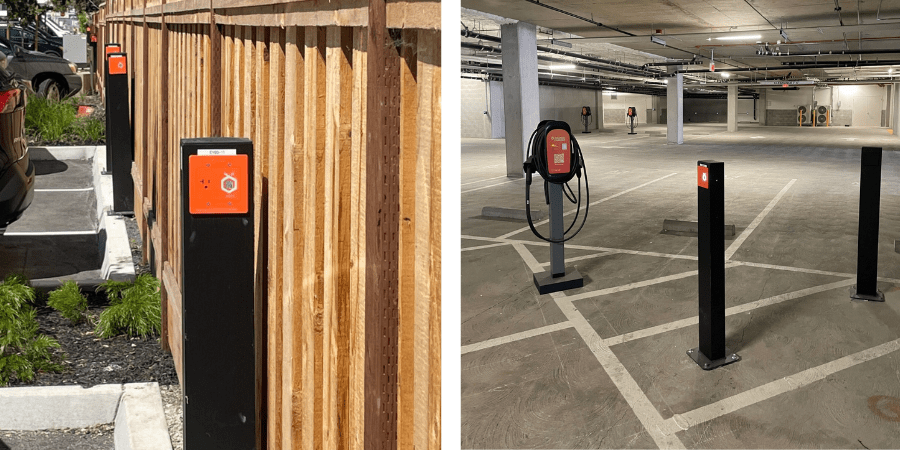
The supplied article is not fundamentally about battery chemistry or cell architecture; it is about charging infrastructure deployment for residential EV adoption. However, from an EV battery engineering perspective, the relevant technical discussion is the operational envelope implied by home charging hardware:
- Level 1 AC charging: low-power, long-duration energy replenishment
- Level 2 AC charging: higher-power, shorter-duration replenishment
- User duty cycles: commuter-driven daily recharge patterns
- Implications for battery stress: reduced fast-charge exposure, lower thermal burden, and generally improved cycle longevity versus frequent DC fast charging
Because the article does not identify a specific vehicle platform or traction battery design, any chemistry assignment must be inferred from the dominant EV fleet mix and charging behavior.
Assumed Cell Chemistry and Intrinsic Limitations
Most likely chemistry context: NMC-dominant fleet, with significant LFP presence
For Bay Area residential charging use cases, the practical chemistry landscape is typically mixed:
- NMC/NCA cells remain common in mainstream and premium EVs due to higher gravimetric energy density.
- LFP cells are increasingly common in cost-sensitive EVs and fleet-oriented applications due to lower material cost, improved thermal robustness, and long cycle life.
If one must infer a “most likely” chemistry from the article’s charging context, NMC-based traction packs are still the most engineering-relevant assumption, because residential charging infrastructure is designed to support a heterogeneous fleet, including higher-range vehicles whose users may rely on Level 2 replenishment. Still, the presence of Level 1 home charging aligns especially well with LFP’s tolerance for shallow daily cycles and reduced need for rapid replenishment.
NMC intrinsic limitations
If the vehicle uses NMC (nickel manganese cobalt oxide) or closely related high-nickel chemistries:
- Thermal sensitivity is higher than LFP, especially at elevated SOC and during aggressive charge acceptance.
- Calendar aging accelerates at high state-of-charge and elevated temperature due to electrolyte oxidation and cathode lattice instability.
- Lithium plating susceptibility increases at low temperature and high charge current, particularly when the anode potential drops near 0 V vs Li/Li+.
- Degradation becomes more anisotropic under repeated partial fast-charge events, with localized current density hotspots near tabs and electrode edges.
NMC is therefore highly dependent on a robust BMS, precise SOC estimation, and effective thermal uniformity.
LFP intrinsic limitations
If the pack uses LFP (LiFePO4):
- Lower energy density means larger/heavier packs for the same range.
- Weak open-circuit voltage slope across much of the SOC window makes SOC estimation less trivial.
- Reduced low-temperature charge acceptance can still be problematic, despite better thermal stability than NMC.
- Power capability is good, but not unlimited; plating risk still exists if aggressive charging occurs below optimal temperature or with insufficient preconditioning.
LFP is generally more tolerant of daily AC charging, but it is not immune to high-rate charging damage or temperature-related lithium deposition.
Solid-state: not implied by the article
There is no evidence of solid-state technology here. If the broader charging ecosystem eventually supports solid-state packs, the main advantages would be:
- improved thermal stability,
- potentially higher energy density,
- reduced flammability risk.
But the key limitations would remain relevant:
- interfacial resistance,
- poor low-temperature kinetics,
- mechanical stress at solid-solid interfaces,
- poor rate performance in early-generation designs.
Thus, for the present use case, solid-state is not a credible assumption.
Thermal Management Challenges Implied by the Charging Profile
Level 1 charging: low heat flux, minimal thermal challenge
A 120 V Level 1 charge is low C-rate relative to pack capacity, often on the order of ~0.05C to 0.15C depending on onboard charger limits and pack size. From a thermal design standpoint:
- Ohmic heating is modest: ( Q \approx I^2R )
- Entropic heat is generally secondary at such low currents
- Cell-to-cell thermal gradients are easier to suppress
- Passive thermal pathways are often sufficient
This is why Level 1 charging is so attractive for residential installations: it significantly reduces thermal stress and avoids extreme battery management complexity.
Level 2 charging: increased thermal gradients and pack nonuniformity risk
At 240 V Level 2 charging, charge power can rise substantially, and the battery pack must absorb higher average current through the onboard charger. This creates several thermal engineering issues:
1. Nonuniform heat generation
Heat generation is not uniform across the pack:
- edge cells often have weaker cooling adjacency,
- center cells may experience different airflow or coolant exposure,
- tab-adjacent zones can exhibit localized resistive heating,
- aged cells with higher impedance heat disproportionately.
2. Liquid cooling plate design constraints
If the pack uses liquid cooling, the cooling plate must address:
- uniform contact pressure between cells and plate,
- high in-plane thermal spreading to avoid hot bands,
- low thermal resistance TIM stack-up,
- pressure drop vs. flow uniformity trade-off in coolant channels.
A poorly optimized plate will show:
- inlet-to-outlet temperature rise,
- cell row thermal gradients,
- localized hot spots near high-resistance cells,
- charging power throttling by the BMS due to worst-cell temperature.
3. Thermal gradients and electrochemical imbalance
Even modest thermal gradients matter because:
- colder cells exhibit higher impedance and lower charge acceptance,
- hotter cells age faster and may drift in capacity,
- BMS balancing becomes less effective if temperature scatter is large.
This causes a feedback loop: the hottest cells age faster, the coldest cells limit charge rate, and overall usable pack power declines.
Tab cooling vs. surface cooling
This article does not specify pack architecture, but from an engineering perspective, the choice between tab cooling and surface cooling strongly shapes fast-charge performance.
Surface cooling
Common in pouch or prismatic architectures:
- coolant removes heat through the broad cell face,
- relatively simple manufacturing,
- effective for moderate charging rates,
- but heat must conduct through multiple internal layers before rejection.
Limitations:
- large cell thickness increases through-plane thermal resistance,
- core temperature can exceed surface temperature significantly,
- hotspot control is weaker if current distribution is uneven.
Tab cooling
More relevant for cylindrical or specialized high-power cells:
- heat is extracted near the current collection path,
- reduces localized tab temperature rise,
- can improve charge acceptance at higher C-rates,
- useful where tab ohmic heating dominates.
Limitations:
- complex packaging,
- tab region may still suffer current crowding,
- difficult to scale uniformly across very large modules,
- may not solve core heating if electrode thickness remains large.
Engineering implication
For residential AC charging, surface cooling is usually sufficient because thermal power is low. For Level 2, good surface cooling plus intelligent derating is often adequate. Tab cooling becomes more relevant as charge power rises and if the pack is optimized for frequent high-rate operation.
Fast-Charging Constraints and Electrochemical Limits
Important caveat: the article is about AC charging, not DC fast charging
The installed infrastructure is Level 1 and Level 2 AC, not DC fast charging. That matters because onboard AC charging is generally less stressful than external high-power DC charging. Still, the broader engineering question is how such residential infrastructure interacts with battery chemistry and future fast-charge expectations.
Ionic conductivity and charge transport bottlenecks
Fast charging is constrained by the coupled transport of:
- lithium ions in the electrolyte,
- lithium diffusion in the solid active material,
- electron transport in the current collector network,
- charge-transfer kinetics at the electrode/electrolyte interface.
At high C-rates:
- electrolyte concentration gradients increase,
- local overpotential rises,
- ion depletion near the anode interface becomes more severe,
- effective charge acceptance falls.
If ionic conductivity is insufficient or electrolyte tortuosity is too high, the cell develops:
- higher polarization,
- lower usable current,
- elevated heat generation,
- increased degradation risk.
Lithium plating risk at high C-rates
The most critical fast-charge failure mode is lithium plating on the graphite anode.
Mechanism
Plating occurs when:
- anode potential falls below the Li/Li+ reference,
- lithium insertion kinetics cannot keep up with incoming current,
- low temperature or high SOC reduces diffusion rate,
- local current density becomes excessive.
Instead of intercalating into graphite, lithium deposits as metallic lithium.
Consequences
Lithium plating causes:
- irreversible lithium inventory loss,
- SEI layer thickening,
- capacity fade,
- impedance rise,
- dendrite growth risk in severe cases.
Conditions that worsen plating
- low cell temperature,
- high SOC charging,
- high C-rate,
- aged cells with increased impedance,
- nonuniform electrode wetting or manufacturing defects,
- pack-level thermal gradients.
Chemistry-specific fast-charge tolerance
NMC
- Higher energy density, but narrower safe fast-charge window.
- More sensitive to thermal rise and plating under aggressive charging.
- Requires highly optimized preheating and current taper control.
LFP
- Better thermal stability and generally better cycle life.
- Still limited by graphite anode behavior, meaning plating risk remains.
- Often more tolerant of being held at high SOC, but not necessarily of cold fast charging.
Solid-state
- Potentially improved safety envelope, but early systems may suffer from interfacial limitations and poor high-rate capability.
- Fast charging is not automatically solved by solid electrolytes; in fact, interface resistance can be the dominant bottleneck.
System-Level Conclusions for B2B Engineering
What the article really implies about battery engineering
The core technical message is that low-cost, distributed residential charging reduces battery stress by shifting energy replenishment away from high-power public fast charging.
From a battery design standpoint, that means:
- lower average C-rate,
- less thermal abuse,
- fewer plating events,
- better long-term capacity retention,
- reduced need for aggressive pack cooling during routine charging.
Practical implications for OEMs and pack designers
To maximize compatibility with this residential charging model, the battery system should prioritize:
- robust low-current AC charge efficiency,
- excellent thermal uniformity across the pack,
- conservative SOC/temperature charge windows,
- strong low-temperature charge derating,
- accurate cell temperature sensing near tab and core regions,
- BMS logic that differentiates Level 1/Level 2 daily charging from rare fast-charge events.
Bottom line
Although the article is about EV charger deployment rather than batteries, its technical significance is clear: residential Level 1/Level 2 charging is an electrochemically gentle use case. It is most compatible with NMC and LFP traction batteries, while minimizing the thermal and kinetic constraints that dominate DC fast charging. The major design challenge is not peak power delivery, but maintaining pack thermal uniformity, avoiding lithium plating under colder or higher-current conditions, and ensuring long-term cycle stability across diverse chemistries.