Technical Interpretation: What the Article Actually Implies
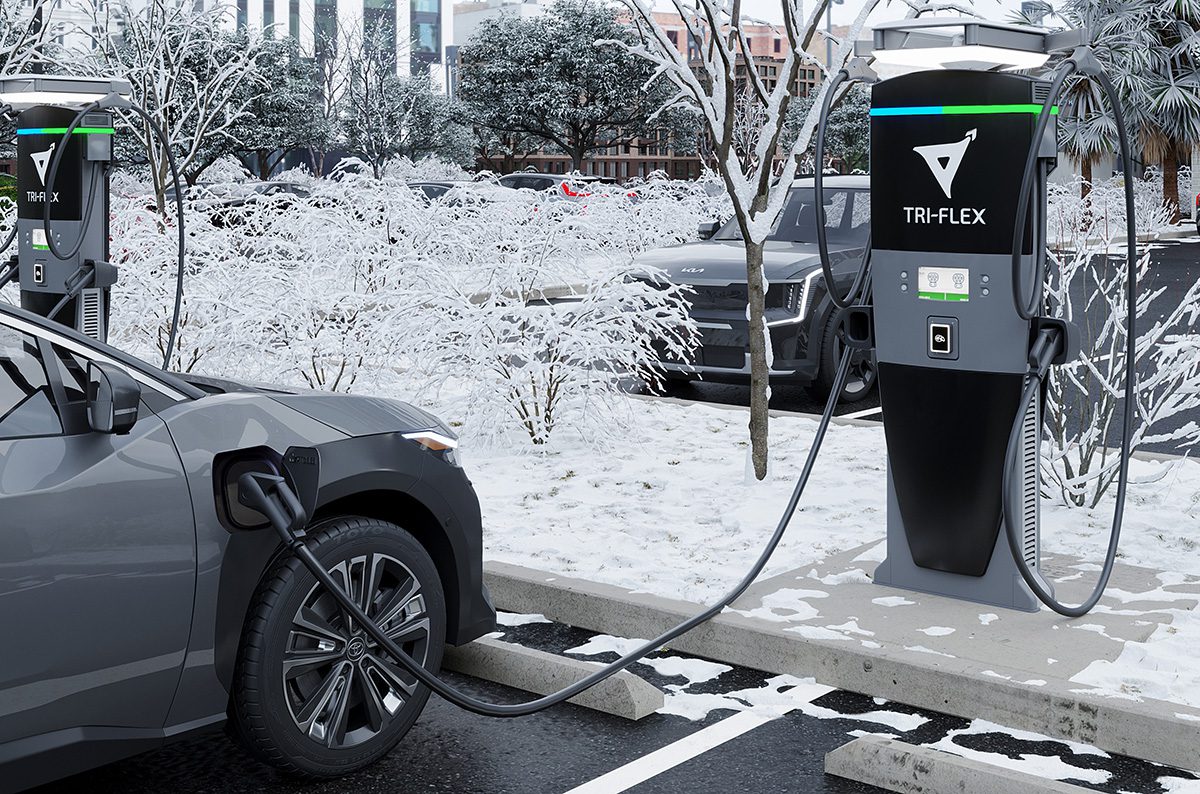
This article is primarily about charging-stack software modularization for DC fast chargers, not battery-cell innovation. However, from a battery-engineering perspective, the charging architecture directly affects battery electrochemical stress, thermal loading, and long-term degradation. The key engineering takeaway is that a more capable charger software stack can improve protocol negotiation, charging control fidelity, and vehicle interoperability — but it does not eliminate the fundamental constraints imposed by cell chemistry and pack thermal design.
Because the article does not specify a vehicle platform or battery chemistry, the most defensible interpretation is that Tritium’s hardware is being prepared for multi-OEM EV compatibility, which means the charging system must support packs spanning LFP, NMC/NCA, and potentially emerging solid-state architectures. Each has very different charge acceptance limits, thermal behavior, and BMS control strategies.
1) Assumed Cell Chemistry and Intrinsic Limitations
Likely chemistry context: mixed-fleet compatibility
A DC charger deployed globally must serve vehicles with:
- LFP (LiFePO4) packs used in cost-sensitive, high-cycle applications
- NMC/NCA packs used where gravimetric energy density is prioritized
- Future solid-state development targets, though still limited in field deployment
Given the emphasis on ISO 15118, Plug & Charge, and fleet integrations, the operational assumption is a heterogeneous vehicle population, not a single chemistry. That means charger-side software must adapt to variable charging curves, temperature windows, and current acceptance limits.
LFP: high durability, weak low-temperature fast-charge performance
If a vehicle uses LFP cells, the charger can often sustain high C-rates at moderate temperatures, but there are intrinsic limitations:
- Lower lithium-ion diffusion kinetics at low temperature compared with many NMC variants
- Flatter OCV-SOC curve, which degrades SOC estimation accuracy near the mid-SOC range
- Lower nominal cell voltage, requiring higher series count for pack voltage targets
- Reduced energy density, which increases pack mass and may influence thermal inertia
Engineering implication: LFP can tolerate aggressive daily fast charging better than many high-nickel systems, but only when cell temperature is controlled within a narrow charge-acceptance window. At cold soak, LFP is especially vulnerable to lithium plating if high current is applied before adequate preconditioning.
NMC/NCA: high energy density, tighter thermal and plating limits
For NMC/NCA-based packs, the key tradeoff is higher energy density at the cost of stricter charge constraints:
- Higher thermal sensitivity due to higher operating voltage and reaction enthalpy under abuse
- Greater parasitic side reactions at elevated SOC and temperature
- More pronounced lithium plating risk during high-current charging at low temperature or high SOC
- Accelerated impedance growth under repeated fast-charge exposure
NMC architectures generally accept fast charging better than LFP in cold conditions only if the pack is actively heated. However, once SOC rises above ~70–80%, charge tapering is typically required to prevent cell overpotential and plating at the graphite anode.
Solid-state: promising but not yet a general fast-charge solution
If the article is interpreted as future-facing rather than present-state, solid-state cells introduce a different constraint set:
- Potentially higher safety margin and improved energy density
- But interfacial resistance at solid electrolyte boundaries is a major bottleneck
- Mechanical contact stability under cycling remains an issue
- Fast-charge performance is often limited more by interface kinetics than bulk ionic conductivity alone
In current practical terms, solid-state is not a justification for assuming “unlimited fast charging.” System-level charge power still depends on electrode current density, interfacial impedance, heat removal, and mechanical integrity.
2) Theoretical Thermal Management Challenges in DC Fast Charging
Why charger software matters thermally
Although the charger itself does not remove heat from the battery, the software stack directly influences:
- Current ramp rate
- Voltage-current negotiation
- Protocol-based current derating
- Preconditioning coordination
- Taper timing near high SOC
A more flexible stack like EVerest can better implement vehicle-specific charge profiles, but the actual thermal bottleneck remains inside the pack.
Liquid cooling plate design: key thermal engineering constraints
For a battery intended to accept DC fast charging, the pack must dissipate both:
- Ohmic heat: ( I^2R ) losses in cells, busbars, tabs, and interconnects
- Entropic heat: chemistry-dependent heat generation that may be positive or negative depending on SOC and temperature
Liquid cooling plates are the dominant solution in high-power EVs, but their effect is strongly limited by geometry:
Core design considerations
- Coolant channel placement relative to cell heat sources
- Contact resistance between cell can and cooling interface
- Thermal spreading resistance through module structures
- Pressure drop vs. flow uniformity
- Coolant inlet/outlet asymmetry, which can create longitudinal temperature gradients
If a pack uses prismatic or pouch cells mounted against cold plates, the main risk is non-uniform heat extraction. Cells near the coolant inlet remain cooler and accept more current, while downstream cells run hotter, age faster, and may be derated by the BMS. This creates a self-limiting system where the pack’s usable fast-charge power is dictated by the hottest cell, not the average cell temperature.
Thermal gradients: the hidden fast-charge limiter
Thermal gradients are often more important than absolute temperature.
Why gradients matter
- Cell impedance rises nonlinearly with decreasing temperature
- Hotter cells may aging faster via SEI growth and electrolyte decomposition
- Cooler cells may lag in diffusion kinetics and become plating-prone
- Module-to-module mismatch causes uneven current sharing in parallel architectures
A DC fast-charge system with poor thermal homogeneity can trigger conservative derating due to:
- voltage imbalance across series groups
- localized hotspot detection
- uncertainty in SOC estimation
- accelerated cell divergence
Engineering outcome: even if peak pack temperature is within safe limits, a 5–10 °C internal gradient can substantially reduce allowable charge current and increase long-term degradation dispersion.
Tab cooling vs. surface cooling
The article does not reference cell mechanical design, but for fast-charge-capable packs this distinction is critical.
Surface cooling
Common in many pouch or prismatic modules:
- Heat rejected through the large cell face to a cold plate
- Effective when cell-to-plate thermal contact is excellent
- Vulnerable to internal gradients because heat generated near electrode current collectors must conduct across the cell thickness before reaching the cooling surface
Tab cooling
Used in advanced high-power designs where tabs become major heat sources:
- High current creates significant resistive heating in tabs and welds
- Cooling tabs can lower peak temperature at the current collection points
- Especially useful because current density is highest near tab connections in laminated cells
Engineering tradeoff
Surface cooling manages average cell temperature, while tab cooling targets hotspot suppression. For extreme fast charging, the best architecture often uses a hybrid approach:
- cold plates for bulk heat extraction
- tab or edge cooling for localized current-collector heating
Without tab-level thermal management, hotspot temperatures can exceed the average cell temperature by enough to accelerate plating or seal degradation, even when the pack appears thermally controlled through the BMS.
3) Fast-Charging Constraints: Ionic Transport and Lithium Plating
Fast charging is limited by transport physics, not just charger power
A 350 kW charger does not guarantee a 350 kW battery charge rate. The battery’s acceptance limit is governed by:
- lithium-ion diffusion in electrolyte
- solid-state diffusion in active materials
- charge-transfer kinetics at interfaces
- anode overpotential
- thermal state of the cell
- SOC-dependent impedance rise
In practical terms, fast charging is often constrained by the anode rather than the cathode. As SOC increases, the graphite anode approaches full lithiation, leaving less electrochemical headroom for rapid further insertion.
Ionic conductivity limitations
The electrolyte must transport lithium ions from cathode to anode fast enough to match the external current. At high C-rates:
- concentration gradients build in the electrolyte
- local depletion occurs near the anode surface
- polarization increases
- effective overpotential rises
If the ionic transport rate cannot keep up, the anode potential can drop close to 0 V vs. Li/Li+, which is the threshold where metallic lithium deposition becomes thermodynamically favorable.
Lithium plating risk
Lithium plating is one of the most important degradation and safety mechanisms under fast charge.
Conditions that increase plating risk
- Low cell temperature: reduced diffusion and higher impedance
- High SOC: anode nearly saturated with lithium
- High charge current: insufficient interfacial kinetics
- Aged cells: increased resistance and less uniform current distribution
- Poor thermal uniformity: local cold spots become plating initiation zones
Consequences of plating
- loss of cyclable lithium → capacity fade
- dendritic growth risk → internal short potential
- SEI instability → impedance growth
- cell-to-cell divergence in parallel strings
For LFP packs, plating is often masked by the chemistry’s stability reputation, but the anode side is typically still graphite-based, so the risk remains very real during cold fast charging. For NMC packs, the energy density advantage comes with a narrower safe fast-charge envelope at high SOC.
Charge tapering is not optional
A sophisticated charging stack should manage:
- constant-current phase at lower SOC
- dynamic taper based on cell temperature and impedance estimate
- conservative ramp-down at elevated SOC
- vehicle-specific preconditioning logic
This is where charging software becomes highly relevant: a protocol stack like EVerest can enable better communication between charger and BMS, but the BMS still decides the actual current limit based on the battery’s electrochemical state.
4) System-Level Engineering Implications for EV Battery Design
What the charger stack can improve
An advanced open software stack can support:
- more accurate negotiation of allowable current and voltage
- vehicle-specific charging curves
- improved Plug & Charge interoperability
- better support for preconditioning and smart charging
- more consistent execution of derating logic
What it cannot solve
No software stack can eliminate:
- low-temperature diffusion limits
- internal cell heating
- thermal gradients in large-format modules
- electrolyte transport limits
- lithium plating at excessive C-rate
Therefore, charger intelligence must be paired with:
- robust cell chemistry selection
- pack thermal architecture optimized for transient heat flux
- high-fidelity sensing at the module and cell-group level
- BMS algorithms capable of impedance-aware current control
5) Engineering Bottom Line
From a battery teardown and pack-design perspective, this article is less about charging software per se and more about the fact that software standardization is becoming a prerequisite for exploiting battery electrochemistry safely.
The dominant technical constraints remain:
- LFP: durable and cost-effective, but limited by cold fast-charge behavior and reduced energy density
- NMC/NCA: higher energy density, but more heat-sensitive and more prone to plating under aggressive charging
- Solid-state: promising, but still constrained by interfacial resistance and immature high-C validation
And regardless of chemistry, successful DC fast charging depends on:
- minimizing thermal gradients
- designing liquid cooling plates for uniform heat extraction
- addressing tab and hotspot heating
- controlling current to avoid diffusion-limited lithium plating
In short, EVerest may improve interoperability and charging control fidelity, but the battery’s intrinsic electrochemical and thermal limitations still define the boundaries of safe fast charging.