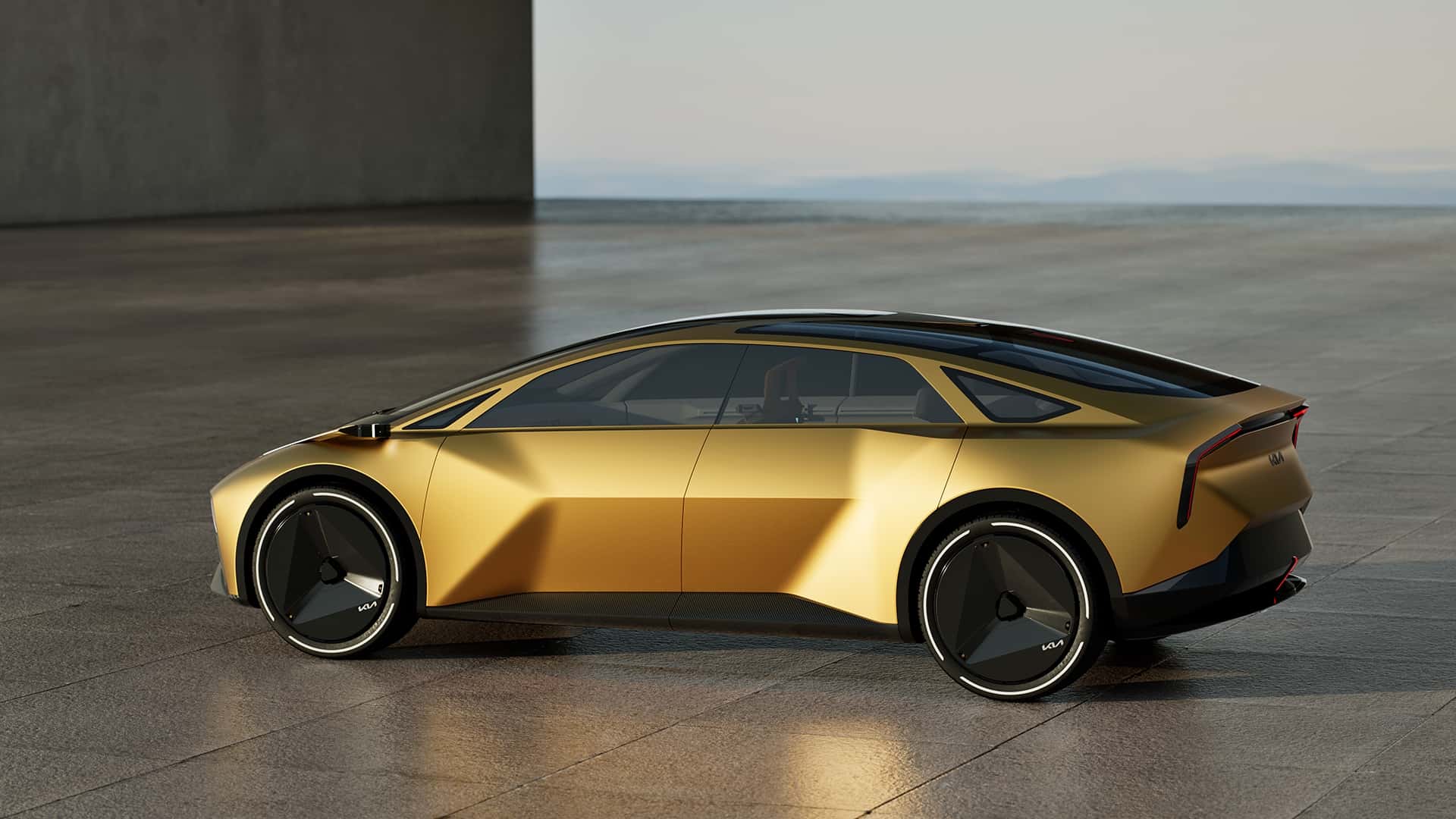
Kia’s Electric Stinger Successor: The Battery Engineering Challenge Behind “Performance Sedan” EVs
Kia’s interest in a spiritual successor to the Stinger highlights a broader industry truth: building a low-slung, high-performance EV is far more difficult than packaging a fast crossover. The article makes clear that the main obstacle is cost, but from a battery engineering perspective the deeper issue is not just economics. It is the convergence of ionic transport limits, heat generation at very high C-rates, lithium plating risk, and mechanical durability under repeated launch-and-cornering loads.
A performance sedan demands sustained power, not just brief acceleration. That requirement exposes the electrochemistry and thermal architecture of the pack in ways that ordinary EVs never fully encounter.
Why High-Performance EV Sedans Stress Battery Chemistry
A “sports sedan for the gamer generation” sounds like a marketing phrase, but it implies a duty cycle that is punishing for the battery. Rapid acceleration, high regenerative braking, repeated high-speed bursts, and track-style use all drive the cell toward conditions where electrochemical polarization rises quickly.
Ionic conductivity becomes a bottleneck
At extreme power demand, the limiting factor is not only electrode capacity, but ion transport through:
- the electrolyte bulk,
- the separator pores,
- the solid-electrolyte interphase (SEI),
- and, critically, the porous electrode network.
As current increases, the lithium-ion concentration gradient steepens across the cell. That causes:
- higher ohmic loss,
- increased concentration overpotential,
- local depletion of lithium near the anode surface,
- and non-uniform reaction kinetics across the electrode.
For an LFP battery, the challenge is even more nuanced. LFP is inherently stable and thermally robust, but it has lower intrinsic electronic conductivity than many high-nickel chemistries. That means the electrode design must compensate with:
- conductive carbon networks,
- thinner coatings,
- optimized porosity,
- and carefully controlled particle morphology.
Without those measures, high-rate charging can create local hot spots and uneven current distribution, especially near tabs and current collector transitions.
Fast charging and high discharge are linked problems
It is tempting to treat fast charging as the only concern, but the same transport limitations appear during aggressive acceleration. Both conditions raise polarization and heat. In a performance sedan, repeated high discharge followed by fast recharge can push the pack into a cumulative stress regime where cell resistance climbs over time.
Thermal Management at Extreme Rates
Heat management is not a supporting function in a performance EV; it is a core enabler. Since battery losses scale roughly with I²R, doubling current can quadruple resistive heating if resistance is unchanged. That makes liquid cooling plates essential for any high-performance EV architecture.
Why liquid cooling plates matter
Liquid cooling plates provide direct heat extraction from the cell stack or module. Their value is not just average temperature reduction, but temperature uniformity. Uniformity is critical because cell aging accelerates when one region runs hotter than the rest.
A well-designed liquid cooling system should address:
- peak thermal loads during launch and fast charging,
- temperature gradients across modules,
- transient heat spikes near tabs and busbars,
- and cold-start preconditioning in winter.
For LFP battery packs, which often operate safely at higher thermal margins than some alternative chemistries, the objective is less about preventing runaway and more about preserving consistent power capability. Even a thermally stable chemistry loses fast-charge performance if temperature falls outside its optimal window.
Thermal runaway is not the only concern
Performance EVs can suffer from “soft” thermal limits long before safety thresholds are reached. These include:
- reduced allowable charge current,
- derating of inverter output,
- slower regenerative braking acceptance,
- and power taper during repeated high-load events.
That is why high-performance thermal management must be integrated with battery control software. The BMS needs to coordinate:
- coolant flow rate,
- chiller activation,
- preconditioning,
- and cell current limits based on temperature prediction, not just measured temperature.
Lithium Plating Risk in Fast-Charging Scenarios
Fast charging is one of the biggest engineering hurdles for a sporty EV sedan. If charging current is too high relative to the anode’s lithiation kinetics, metallic lithium can deposit on the anode surface instead of intercalating into graphite.
Conditions that increase plating probability
Lithium plating becomes more likely when:
- cell temperature is low,
- charge current is high,
- state of charge is already elevated,
- anode diffusion is rate-limited,
- or internal resistance has increased with aging.
In a real-world performance sedan, this is especially relevant because users may arrive at a charger after spirited driving, then plug in again soon after, or alternatively fast charge in cold weather before a performance drive. The cell must tolerate both extremes.
Why plating is dangerous even before failure
Lithium plating is not only a capacity-loss mechanism. It can also create:
- irreversible lithium inventory loss,
- accelerated SEI growth,
- dendritic structures,
- internal short risk over time,
- and rising impedance.
For LFP battery systems, the safer cathode chemistry does not eliminate anode-side plating risk. Safety is determined by the full cell system, not only the cathode choice. A stable LFP battery can still age prematurely if thermal and charging controls are poorly tuned.
Engineering responses
To reduce plating risk, manufacturers can use:
- lower-impedance anode formulations,
- graphite-silicon blends with careful expansion control,
- advanced electrolyte additives,
- charge-current tapering algorithms,
- and aggressive thermal preconditioning before high-power charging.
The BMS should also apply adaptive fast-charge maps based on pack temperature, cell age, and recent driving history.
Structural Integrity Under Performance Use
A sports sedan is not only an electrochemical device; it is a mechanical system exposed to vibration, crash loads, torsion, and thermal cycling. Repeated fast charging and high-power discharge create expansion-contraction cycles that affect interfaces within the pack.
Pack-level mechanical concerns
Structural integrity challenges include:
- cell swelling and stack pressure variation,
- loosening of interconnects,
- coolant plate seal durability,
- bond-line fatigue in module adhesives,
- and vibration-induced fretting at busbars.
These issues matter more in a low-profile sedan package because floor-height constraints limit available space for compliance and thermal hardware. A sleek body style often forces tighter packaging, which can intensify thermal and mechanical gradients.
LFP advantages and limitations
LFP battery systems offer strong thermal stability and long cycle life, making them attractive for performance EVs that need durability. However:
- their lower energy density can increase pack mass,
- added mass increases structural and suspension loads,
- and larger pack volume complicates thermal routing.
That means a performance sedan using LFP must compensate through platform engineering: stronger underbody structures, optimized module segmentation, and carefully balanced cooling channels.
What a Viable Stinger Successor Would Need
For Kia to make a credible electric performance sedan, the battery system would need to balance emotion with discipline.
Likely technical requirements
- High-power-capable cells with low internal resistance
- Liquid cooling plates with tight temperature control and minimal gradient
- BMS logic that predicts plating risk and dynamically limits charge current
- Mechanical pack architecture designed for repeated torque and vibration loads
- Thermal preconditioning for both fast charging and hard driving
- Robust busbar and tab design to avoid localized heating
Conclusion
The article’s core point is financial: high-performance EV sedans are expensive. But from a battery engineer’s standpoint, cost is only the visible layer of a deeper technical stack. To deliver a true Stinger successor, Kia would need to solve the coupling between ionic conductivity, fast charging, heat generation, lithium plating, and structural endurance.
The opportunity is real. The challenge is building a pack that can accelerate like a performance car, charge like a modern EV, and survive like an industrial system. That is where LFP battery design, thermal management, and liquid cooling plates become decisive—not as accessories, but as the foundation of the vehicle’s identity.
Source reference: Industry News