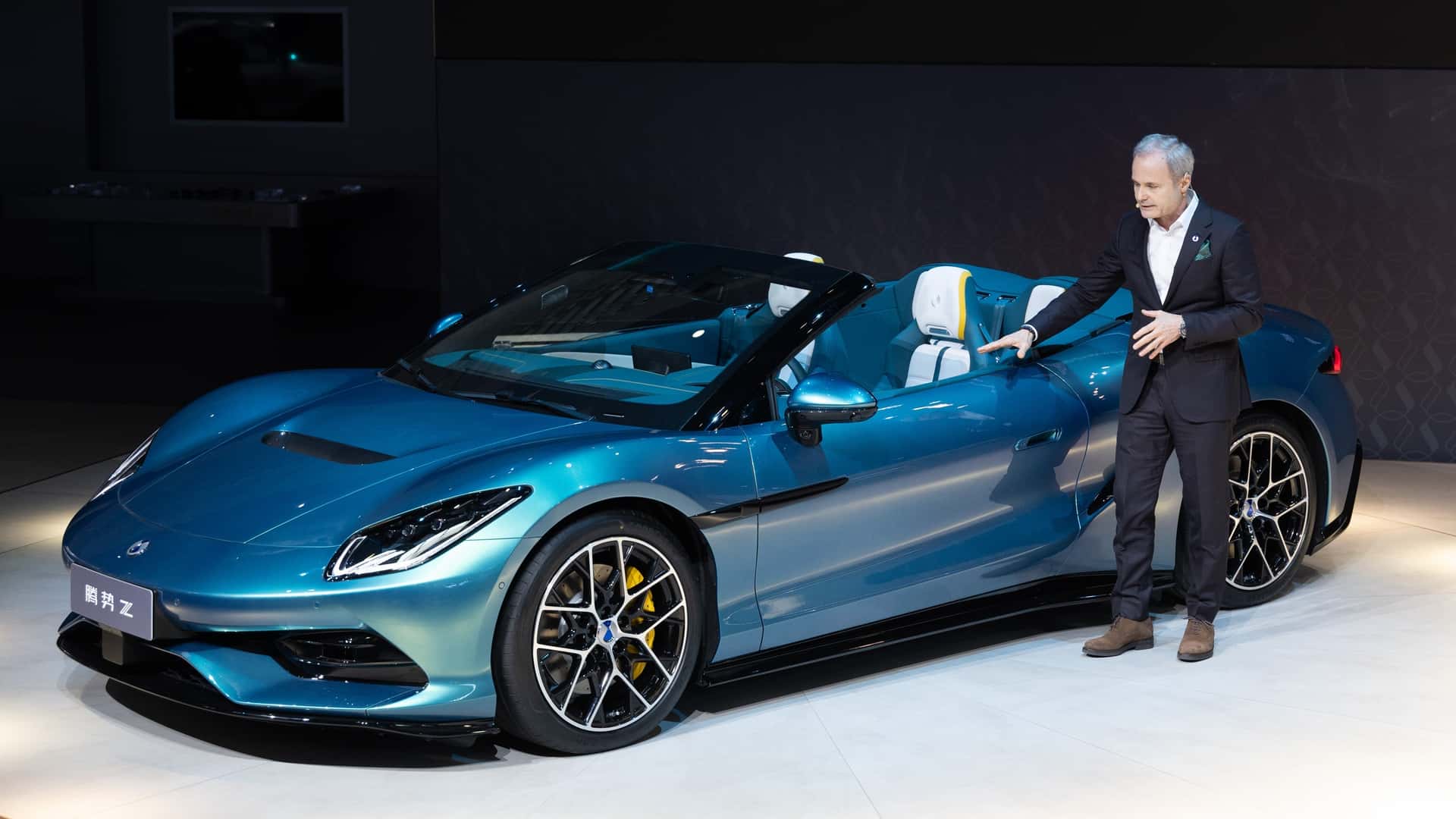
Beijing Auto Show 2026: What the EV Surge Means for Battery Engineering
The 2026 Beijing Auto Show made one thing clear: the next wave of EV competition is no longer just about range or cost. It is about how much energy can be delivered, how fast it can be accepted, and how reliably the pack survives repeated abuse. That is especially relevant for the LFP battery segment, where OEMs are trying to offset the chemistry’s lower energy density with aggressive charging capability, larger pack sizes, and higher vehicle mass.
For battery engineers, the show’s emphasis on larger premium EVs, high-performance models, and rapid product development points directly to the central technical challenge of the moment: fast charging without sacrificing safety, longevity, or structural integrity.
Why Fast Charging Is Harder for LFP Than It Looks
LFP chemistry is attractive because it offers strong thermal stability, long cycle life, and lower material cost than nickel-rich chemistries. But at high charge rates, LFP cells face a different set of constraints rooted in ionic conductivity and diffusion kinetics.
Key electrochemical limitations
-
Lower intrinsic ionic transport at low temperature
- Electrolyte conductivity decreases as temperature drops.
- The lithium-ion transport through the porous electrode network becomes slower.
- This increases polarization and causes the cell voltage to rise more quickly during charging.
-
LFP’s two-phase reaction behavior
- LFP operates with a relatively flat voltage plateau.
- At extreme charge rates, local concentration gradients can become severe.
- The effective reaction front may become nonuniform, increasing stress within the electrode.
- Rate-induced resistance rise
- Ohmic resistance, charge-transfer resistance, and diffusion resistance all increase the heat load.
- The battery is forced to convert more input energy into heat rather than stored electrochemical energy.
In practical terms, the chemistry can tolerate abuse better than many alternatives, but it does not magically eliminate transport bottlenecks. Fast charging still depends on the pack’s ability to keep ions moving efficiently and temperatures balanced across every cell.
Heat Generation at Extreme Charge Rates
At high charging power, heat generation is dominated by a combination of irreversible and quasi-reversible sources:
- Ohmic heating
- Caused by internal resistance in current collectors, tabs, electrolyte, separator, and busbars.
- Reaction heat
- Associated with charge-transfer processes at the electrode-electrolyte interface.
- Concentration polarization
- Occurs when ion transport cannot keep up with current demand, leading to steep concentration gradients.
- Contact resistance heating
- Becomes relevant in modules and packs if mechanical compression, weld quality, or interface materials are inconsistent.
For a high-capacity EV pack, these effects can create strong thermal gradients within minutes. Those gradients matter because battery degradation is rarely caused by average temperature alone; it is usually driven by hotspots and cell-to-cell imbalance.
How Thermal Management Systems Handle the Load
Modern EV thermal management is increasingly designed around the assumption that fast charging is a core use case, not an edge case. That is where liquid cooling plates become critical.
Why liquid cooling plates dominate
Liquid cooling plates provide:
- High heat transfer coefficients
- Better temperature uniformity than air cooling
- Scalable integration for large-format modules and cell-to-pack systems
- Faster response during transient charging events
In a well-designed system, coolant is routed through plates placed in close thermal contact with the cell stack or module base. The goal is not just to reduce peak temperature, but to suppress thermal gradients across the pack.
Design priorities for extreme-rate charging
- Low thermal resistance interface
- TIM selection, contact pressure, and flatness are crucial.
- High coolant flow stability
- Flow distribution must avoid dead zones and local overheating.
- Fast control response
- The chiller, pump, and valves must react before hotspots accumulate.
- Uniform pack-level temperature mapping
- A few degrees of spread can significantly alter lithium plating risk and aging rate.
What “good” thermal management must achieve
- Keep cells within the optimal temperature window for fast charge acceptance.
- Minimize intra-pack temperature spread.
- Avoid thermal shock during preconditioning.
- Maintain consistent performance across repeated charge cycles.
For LFP battery packs, this often means active preheating in cold climates and aggressive cooling in hot or high-power charging scenarios. The same pack may need both within a single day depending on driving and charging patterns.
Lithium Plating: Still a Real Risk in LFP Fast Charging
A common misconception is that LFP is immune to lithium plating because it is more thermally stable than nickel-rich chemistries. That is not true. Plating is primarily a kinetic and potential management problem, not just a thermal stability problem.
When plating occurs
Lithium plating becomes likely when:
- Charging current is too high for the available diffusion rate
- Cell temperature is too low
- Electrode potential drops near or below 0 V vs. Li/Li+
- Local current density becomes excessive
- The anode is not able to intercalate lithium fast enough
Why it matters
Plated lithium can:
- Reduce usable capacity
- Increase impedance
- Form dendritic structures under some conditions
- Raise internal short-circuit risk
- Accelerate cell-to-cell imbalance
LFP packs are often paired with graphite or graphite-silicon anodes, and those anodes are where plating risk is concentrated. The issue becomes more severe during:
- Cold-weather fast charging
- Repeated high-C charging
- Uneven thermal distribution across the pack
- Aging-related resistance growth
Battery management strategies
To reduce plating risk, OEMs and pack designers should implement:
- Dynamic charge tapering
- Preheating before high-power charging
- Cell-level temperature and voltage monitoring
- Current limiting based on impedance and state of health
- Adaptive charging curves rather than fixed profiles
Structural Integrity Under High C-Rate Stress
Fast charging does not only stress electrochemistry. It also stresses the mechanical architecture of the cell and pack.
Degradation pathways tied to mechanical stress
- Electrode expansion and contraction
- Repeated cycling changes stack pressure and can affect contact quality.
- Particle cracking
- Particularly relevant at the anode if silicon is present, but also possible through binder fatigue.
- Separator stress
- Local overheating or swelling can reduce dimensional stability margins.
- Tab and weld fatigue
- High currents intensify localized heating and mechanical stress at joints.
- Module deformation
- Thermal gradients can create differential expansion across the pack.
Although LFP’s olivine structure is relatively robust, the cell still depends on a mechanically stable electrode stack and consistent compression. In large-format premium EV platforms, structural battery integration can improve packaging efficiency, but it also raises the bar for thermal expansion management and crash durability.
Engineering Implications for the Next Generation of EV Packs
The Beijing show highlighted a shift toward larger, more premium vehicles, which means battery packs will increasingly be expected to deliver both high energy and high charge power. For LFP battery systems, the path forward is not simply higher current. It is smarter current management supported by stronger thermal architecture.
Practical development priorities
- Improve electrolyte conductivity at low temperature
- Reduce internal resistance through better electrode design
- Increase pack-level thermal uniformity with advanced liquid cooling plates
- Use predictive controls to prevent lithium plating
- Reinforce mechanical integrity under thermal cycling and high current loading
- Validate charging performance over aging, not just at beginning of life
Bottom line
Fast charging success in LFP battery platforms will depend on three tightly coupled disciplines:
- Electrochemical transport
- Thermal management
- Mechanical durability
At extreme charge rates, the pack must deliver ions quickly, remove heat evenly, and preserve structure over thousands of cycles. The companies that can balance those requirements will define the next generation of competitive EVs.
Source reference: Industry News