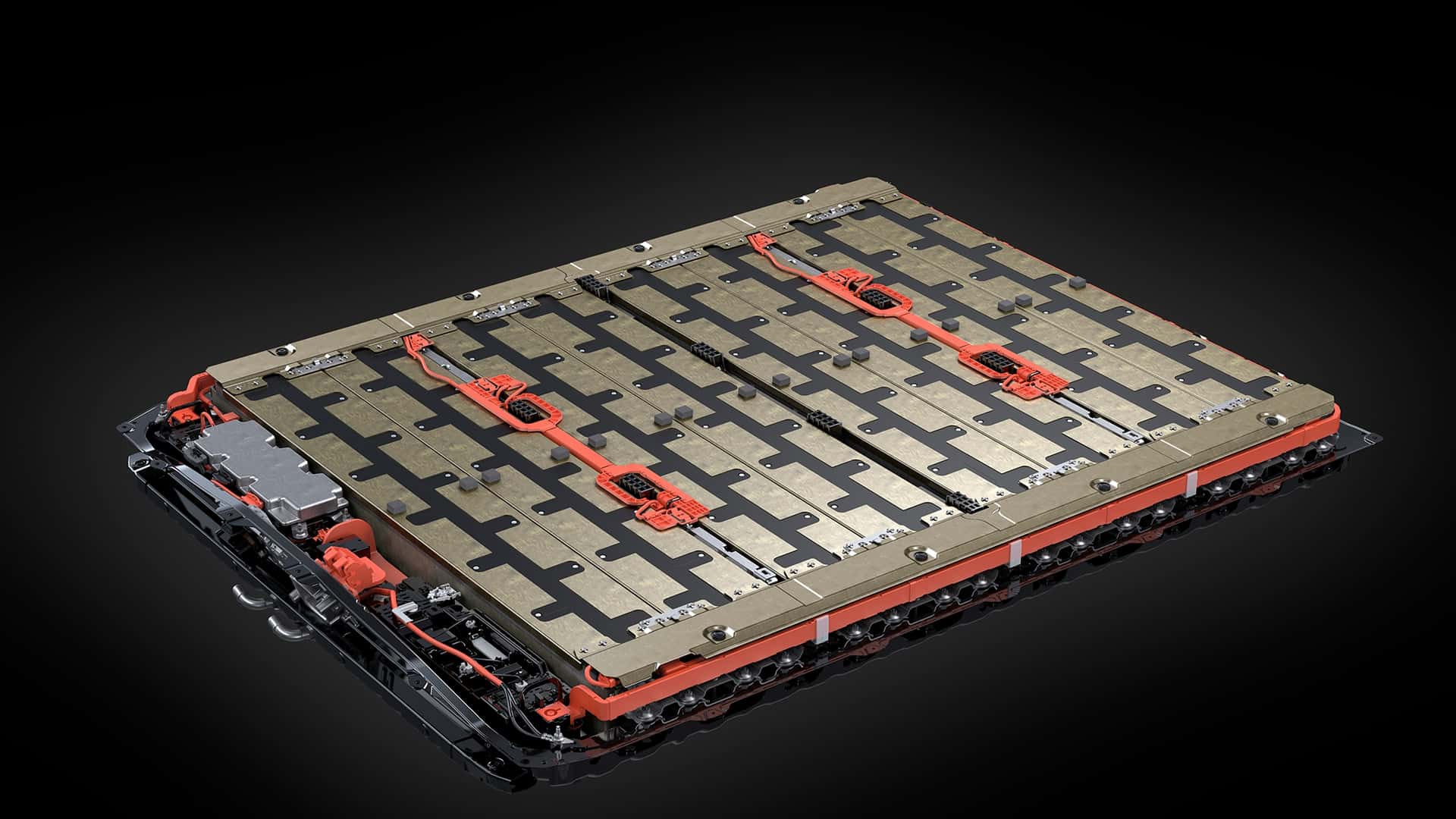
AI-Guided Fast Charging: Why Battery Longevity Still Comes Down to Heat, Transport, and Interfaces
Fast charging is no longer a niche capability; it is becoming a defining requirement for EV usability. Yet every step up in charge rate compresses the battery’s operating window, increasing heat generation, ionic transport stress, and the risk of lithium plating. The Chalmers University study is significant not because AI changes electrochemistry, but because it can dynamically manage charging conditions to stay closer to the battery’s safe operating envelope. For LFP battery packs in particular, where thermal robustness is generally better than in higher-energy chemistries, the same fast-charging constraints still apply: ions must move quickly enough, heat must be removed efficiently, and degradation mechanisms must remain controlled.
Why High-Rate Charging Is Fundamentally Hard
At extreme charge rates, the limiting factor is not simply charger power. The bottleneck is the battery’s internal transport physics.
Ionic conductivity and concentration polarization
During fast charging, lithium ions must travel from the electrolyte through the porous cathode, separator, and anode structure, then intercalate into active material particles. As current rises:
- Ion flux increases sharply.
- Electrolyte concentration gradients form more quickly.
- Local depletion near the anode surface can occur.
- Cell voltage rises due to polarization even when state of charge is still moderate.
This creates a mismatch between external charging power and internal acceptance rate. If lithium ions cannot reach intercalation sites quickly enough, the anode surface potential can drop low enough to trigger lithium plating.
Temperature dependence of transport
Both ionic conductivity and solid-state diffusion improve with temperature, but only within a controlled range. Higher temperature lowers resistance and helps suppress plating risk during charging. However:
- Excess heat accelerates side reactions.
- Elevated temperature thins the solid electrolyte interphase, then destabilizes it.
- Repeated thermal cycling can increase mechanical fatigue in electrodes and interfaces.
In other words, fast charging needs heat in moderation, but not too much.
Lithium Plating: The Key Degradation Risk
Lithium plating is one of the most important failure pathways under aggressive fast charging. It occurs when lithium ions arrive at the graphite anode faster than they can be inserted into the host structure.
Conditions that promote plating
- Low temperature
- High current density
- High state of charge
- Strong cell-to-cell imbalance
- Localized resistance rise from aging
Under these conditions, part of the incoming lithium deposits as metallic lithium rather than intercalating cleanly. That metal can later become isolated, react with electrolyte, or form dendrites in severe cases.
Consequences
Lithium plating causes multiple forms of damage:
- Loss of cyclable lithium, reducing capacity
- Growth of resistive surface films
- Higher impedance and more self-heating during future use
- Potential safety risk if deposits become morphologically unstable
- Faster aging of already stressed cells
AI-assisted charging is valuable because it can reduce current when the battery is entering a plating-prone regime, rather than following a fixed charge profile that ignores real-time battery state.
Thermal Management: The Other Half of Fast Charging
High-rate charging converts a meaningful portion of electrical power into heat. That heat must be managed at the cell, module, and pack level.
Heat generation mechanisms
The main sources are:
- Ohmic losses in current collectors, tabs, and interconnects
- Electrochemical polarization losses
- Entropic heat, which changes with SOC and chemistry
- Localized heating from nonuniform current distribution
Even in an LFP battery, which typically offers good thermal stability, high power charging can create steep gradients across cells or within large-format prismatic cells.
Why temperature uniformity matters
It is not enough to keep average pack temperature low. If one region runs hotter than another:
- Aging becomes spatially nonuniform
- Local resistance rises over time
- Cell balancing becomes harder
- Hot spots can accelerate separator shrinkage or binder degradation
- Cold regions become plating-prone during the same charge event
A well-designed thermal management system must therefore control both absolute temperature and temperature spread.
Liquid Cooling Plates and High-Rate Charging
Liquid cooling plates are among the most effective tools for managing the thermal load of fast charging, especially in large EV battery packs.
Why liquid cooling is preferred
Compared with air cooling, liquid systems offer:
- Higher heat capacity
- Better heat transfer coefficient
- More compact thermal paths
- Stronger ability to remove heat from dense pack architectures
At fast-charge rates, a cooling plate can extract heat directly beneath cell rows or modules, preventing the surface temperature from climbing too rapidly.
Design considerations for cooling plates
A robust cooling plate strategy must balance several variables:
- Coolant flow rate
- Channel geometry and pressure drop
- Plate-to-cell thermal contact resistance
- Material conductivity and corrosion resistance
- Packaging constraints and serviceability
For a fast-charging pack, the challenge is not merely removing heat. It is maintaining a narrow thermal envelope across the entire cell population so that no cell is forced into a plating-prone condition while others remain comfortably warm.
Limits of thermal management
Even advanced liquid cooling plates cannot solve every fast-charging problem. They can manage heat, but they cannot eliminate:
- Diffusion limitations inside active particles
- Electrolyte transport bottlenecks
- Mechanical stress from repeated expansion and contraction
- Degradation from prolonged high SOC exposure
That is why thermal management and charging control must be co-optimized.
Structural Integrity Under Repeated Fast Charging
Mechanical durability is often overlooked, but it becomes critical when fast charging is repeated frequently.
Sources of structural stress
- Particle cracking in active materials
- Binder fatigue in electrodes
- Delamination at electrode/current collector interfaces
- Separator stress from local swelling and thermal gradients
- Stack pressure changes in pouch or prismatic cells
When a cell is charged rapidly, lithium insertion can create steep concentration gradients. These gradients lead to local swelling and nonuniform strain. Over time, the mechanical damage increases impedance and reduces the effective active area.
Relevance to LFP battery systems
LFP battery chemistries are known for strong thermal stability and long cycle life, but they still face structural stress under high power operation. The olivine structure of LFP is stable, yet the cell-level architecture can still degrade through:
- Conductive network disruption
- Carbon coating wear
- Electrode porosity changes
- Loss of contact between particles and current paths
So while LFP offers a safety advantage, it is not immune to fast-charging wear.
How AI Improves the Charging Process
The most important contribution of AI is adaptability. A fixed charging curve assumes average behavior; an AI-based system can respond to the actual battery state.
What the controller can monitor
- Cell temperature and temperature gradients
- State of charge
- State of health
- Internal resistance trends
- Voltage relaxation behavior
- Historical degradation response
What it can adjust
- Charging current amplitude
- Current ramp rate
- Voltage ceiling behavior
- Time spent in high-current regions
- Cell-specific or module-specific charging profiles
This allows the system to reduce stress when transport limitations or thermal limits are approaching, while preserving strong charging performance when the battery can safely accept it.
Engineering Implications
If validated in real-world fleets, AI-assisted fast charging could influence pack design and lifecycle economics.
- Battery warranties may be extended
- Used EV residual values may improve
- Fast-charge-heavy use cases become less punitive
- Thermal system requirements may shift from oversized protection toward intelligent control
- Data-driven BMS software becomes a core durability feature
For battery engineers, the message is clear: fast charging is no longer just a power electronics problem. It is a coupled electrochemical, thermal, and mechanical optimization problem.
Bottom Line
The Chalmers result points toward a more nuanced future for EV charging. The real challenge is not maximizing current at all costs, but keeping lithium transport, heat rejection, and structural stress inside a narrow safe zone. AI can help identify that zone in real time, but the underlying physics remains unchanged: ionic conductivity limits, lithium plating risk, and thermal gradients still define the boundaries of durable fast charging. Liquid cooling plates, robust thermal management, and chemistry-aware control will remain essential if fast charging is to become both fast and long-lived.
Source reference: Industry News